MNI RBA WATCH: Board To Hold At 3.6%, Contemplate 2026 Outlook

The Reserve Bank of Australia looks set to leave the cash rate unchanged at 3.6% when it meets Tuesday, as risks to its outlook remain balanced and policymakers await further data to gauge the restrictiveness of current levels.
The Board has held the cash rate steady since August, and adopted a more cautious tone in November following strong Q3 inflation data. (See MNI RBA WATCH: Bullock Strikes Cautious Tone Following Pause)
While inflation continues to print above expectations, eliminating market speculation of any rate cuts next year, the Board is expected to look through volatile monthly figures in favour of more complete seasonally adjusted quarterly data. Despite stronger inflation, the RBA still sees economic risks as balanced and the 3.6% cash rate as somewhat restrictive and above neutral, though close enough to make precise calibration difficult. (See MNI POLICY: RBA Sees Balanced Risk, Despite Monthly CPI Shock)
CPI, LABOUR, GDP
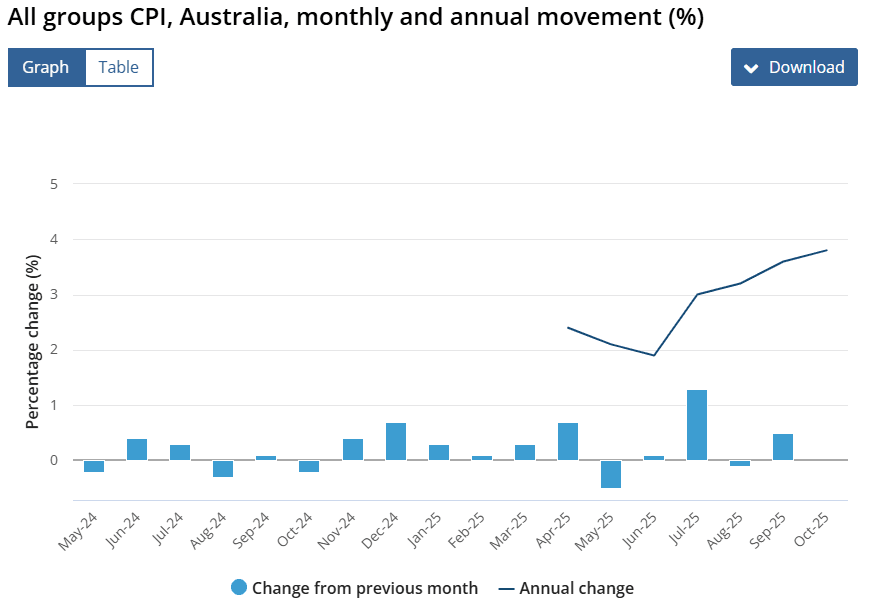
Recent data reflects the RBA’s view that risks remain mixed. Headline inflation rose 3.8% y/y in October, 20bp above expectations, while trimmed mean inflation increased 3.3% y/y, 30bp higher than anticipated, according to the first release of the complete Monthly Consumer Price Index by the ABS. Housing remained the largest contributor to annual inflation, rising 5.9%, followed by food, non-alcoholic beverages, and recreation and culture, each up 3.2%.
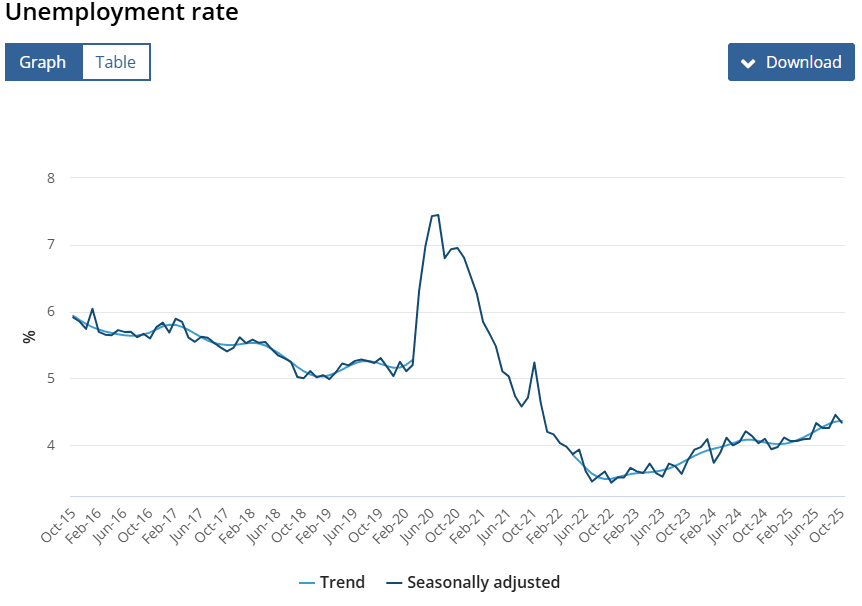
Australia’s Wage Price Index rose 0.8% in Q3, in line with expectations and unchanged from Q2, while unemployment fell 20bp to 4.3% in October, 10bp better than expected, as the economy added 42,000 jobs – double forecasts. Full-time employment rose by 55,000, including 29,000 women and 26,000 men, while part-time employment declined by 13,000.
Meanwhile, Q3 GDP rose 0.4% q/q, 30bp below expectations, and 2.1% y/y, 10bp below forecasts. The RBA expects GDP growth to reach 2% by December and 1.9% in Q2. GDP per hour worked, a key measure of productivity, fell 20bp to 0.2%, while real unit labour costs dropped to -0.1% after rising 0.9% in Q2.
2026 OUTLOOK
Some former RBA economists expect a rate hike in Q1 2026. Former board member Warwick McKibbin told MNI last month the nominal neutral rate is likely 4% or above, significantly higher than RBA models, increasing the likelihood of at least one hike before April. He estimated a 25% chance of a Q1 increase, noting the bank’s 2.5-3.5% neutral rate estimate is too low. With zero productivity growth, high real wage growth is likely to be inflationary, McKibbin added.
Justin Fabo, former head of international financial markets at the RBA, noted that as the labour market tightens and businesses report shrinking spare capacity, a rate hike may become necessary. “A hike is absolutely a risk next year. There are a lot of moving parts, but if the global backdrop holds up, there’s definitely a risk creeping in. Financial markets are starting to toy with that possibility,” he said.
Markets have fully priced in a 25bp hike by August.


