MNI RBA WATCH: Board To Consider Hike Ahead Of Oil Shock

The Reserve Bank of Australia board will strongly consider hiking the 3.85% cash rate by 25 basis points at next week’s meeting as it seeks to contain already-elevated inflation as oil prices surge.
The RBA faces a potential nightmare scenario, with higher oil prices threatening to push already-elevated inflation higher and risk unanchoring expectations. (See MNI: March RBA Hike Risk Rises - Ex Staffers)
Markets have repriced sharply following the U.S. and Israeli strikes on Iran, the closure of the Strait of Hormuz, and hawkish comments from Deputy Governor Andrew Hauser, with overnight index swaps now assigning a 67% chance of a hike next week, up from just 10% following February's 25bp hike which was driven by a series of persistently strong CPI prints above the Bank’s 2-3% target band. (See MNI RBA WATCH: Bullock Says Policy Too Loose, Hikes 25BP)
Markets also see a 68% chance of a further increase in May, and imply a 4.5% cash rate by December — the highest since late 2011.
EXPECTATIONS & ECONOMIC DATA
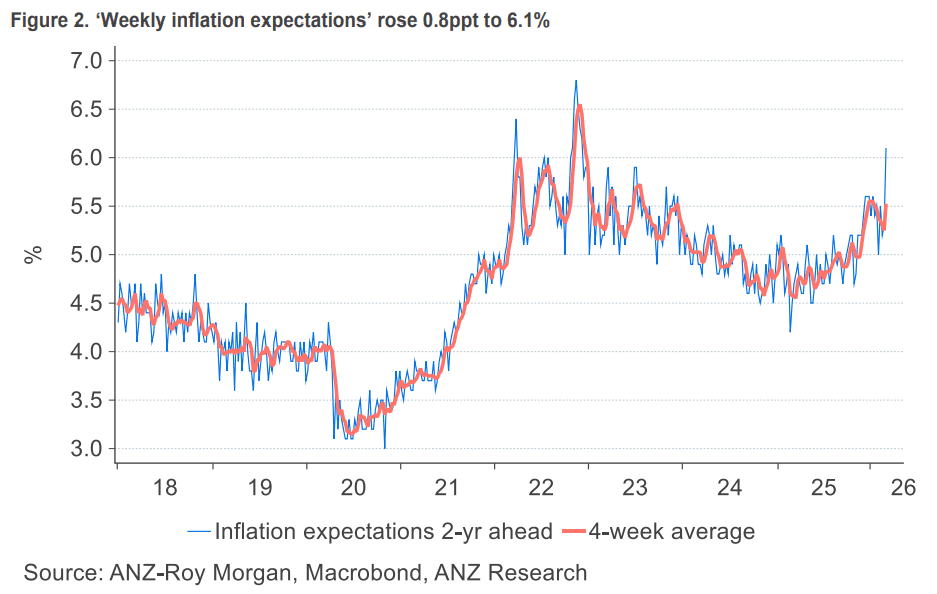
Hidden PDFon Tuesday showed inflation expectations jumping 0.8 percentage points to 6.1%, a three-year high, while consumer confidence fell 3.7 points to 73.4. The data preceded Hauser’s warning that keeping rates too low could fuel further inflation pressures, echoing Governor Michele Bullock’s previous comment that next week’s meeting is “live.”
Q4 GDP also exceeded the RBA’s expectations, growing 2.6% annually, 30 basis points above the Bank’s 2.3% forecast, while revisions to 2025 GDP showed the Bank was lowering the cash rate last year even as economic growth accelerated.
The unemployment rate, at 4.1%, signals a tight labour market relative to RBA models, which peg NAIRU at 4.9% — above the Bank’s internal 4.6% estimate, according to testimony to the Federal Government’s Economics Legislation Committee in February.
Former board member Warwick McKibbin called on the Bank to act early to lift rates, arguing that at 3.85% the cash rate was already too accommodative before the Middle East escalation. He suggested a rate closer to 4.2% is needed to pre-empt an oil-driven supply shock and anchor inflation expectations.
HOLD CASE
Some ex-staffers, however, noted the Bank’s conservative approach may see it hold next week and await Q1 CPI data in April before hiking in May. “The global macro situation is so uncertain. There are upside inflationary risks and downside growth risks…this rate call is incredibly hard to think about,” said Martin Eftimoski, an RBA economist from 2017–21. He also criticized the Bank’s 2022 “narrow path” strategy, noting it failed to contain inflation and left Australia at risk of unanchored medium-term expectations.


