MNI RBNZ WATCH: RBNZ To Cut 25bp, Signal Path Ahead

The Reserve Bank of New Zealand is expected to cut its Official Cash Rate by 25 basis points to 2.25% on Wednesday, while fresh forecasts will provide clearer guidance on the track for rates and its assessment of inflation and labour-market risks.
The RBNZ has lowered the OCR by 300bp since beginning its easing cycle in August 2024. October’s 50bp cut brought the policy rate to its lowest level since October 2022, as the Bank moved to support activity amid persistent spare capacity and a 0.9% quarterly GDP contraction in Q2. (See MNI RBNZ WATCH: MPC Strengthens Easing Bias With 50bp Cut)
Markets have fully priced in next week’s cut but are less certain about the scale of further easing, with the OCR priced at 2.099% by May. November’s Monetary Policy Statement (MPS) will be central to understanding the Monetary Policy Committee’s reaction function.
INFLATION & LABOUR
Debate within the MPC will likely centre on the balance between ensuring inflation remains firmly within the 1-3% target band and the need to bolster demand to close the output gap. (See MNI: RBNZ's Easing Likely Over With Next 25bp Cut - Fmr Staff) The MPS will outline the Bank's key judgements on excess capacity, the near-term growth and inflation profiles, and the anchoring of inflation expectations.
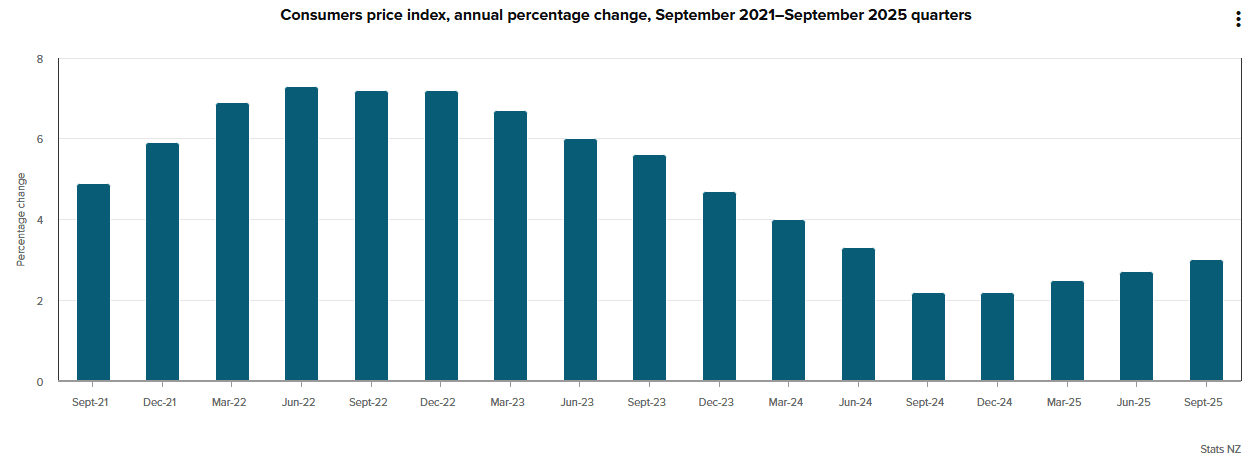
While Q3 CPI rose to 3.0% y/y as expected, domestically-generated inflation continued to ease and core measures were stable or slightly lower.
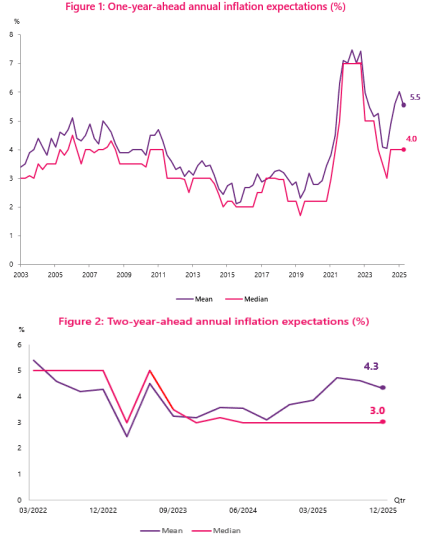
Business-based surveys also show inflation expectations are well anchored. While firms report rising operating costs, weak demand is limiting the ability to pass on increases. In contrast, household inflation expectations remain elevated, but static. (See charts below)
The labour market softened in Q2, with flat employment and the unemployment rate rising to 5.3%, while wage growth has remained subdued.
GLOBAL CONDITIONS
While global conditions have proved more resilient than expected, uncertainty could still push the Bank toward further easing in 2026, particularly in the event of any sharp correction in U.S. and European equity markets linked to elevated AI-driven valuations, which could drive a further 50bp of easing next year.
Otherwise, the path for rates will hinge on how quickly the output gap, currently estimated at around -1.5% to -1.7%, narrows and whether renewed food, electricity and council-rate inflation spill over into broader wage and price pressures, former RBNZ officials told MNI.


