MNI: RBA's Q3 CPI Miss Ups H1 Hike Odds - Ex Research Chief

Stronger-than-expected Q3 inflation data has almost eliminated any chance of further easing by the Reserve Bank of Australia this year and could even force rate hikes in H1 2026 if Q4 and Q1 CPI results come in hot, a former RBA senior economist told MNI.
John Simon, adjunct fellow at Macquarie University and head of the RBA’s economic research department from 2014 to 2024, questioned whether the current 3.6% cash rate will be enough to temper inflation, which rose to 3.2% y/y in Q3 – 20 basis points above expectations and up from 2.1% in Q2. Trimmed mean, the RBA’s preferred measure, also increased 3% from 2.7%, running 30bp above forecasts, Australian Bureau of Statistics data showed Wednesday. (See chart)
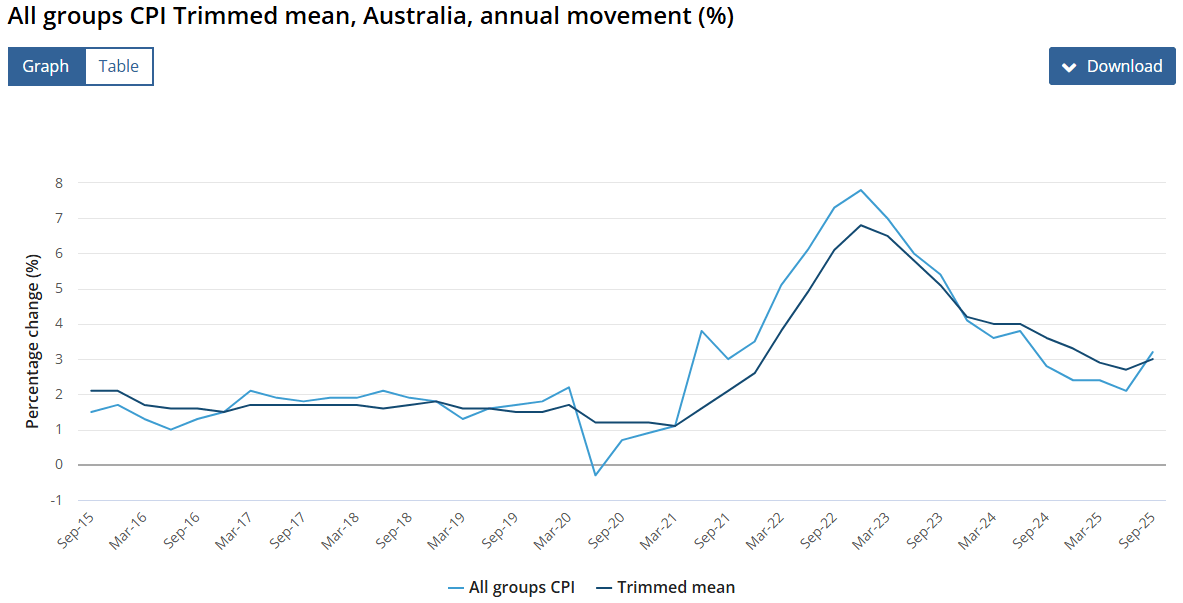
“If we’re close to long-run neutral – and I’ve been saying 3.5%, which is where we are – and the economy still has heat in it, that suggests an increase might actually be on the cards from here,” Simon said. “I wouldn’t expect the science to be clear until next year on that front.”
Markets sharply repriced easing expectations after the CPI release, slashing the odds of a move lower on Tuesday to about 6% from 40% and delaying a further 25bp cut to at least May.
FURTHER HIKES
However, Simon noted that if inflation continues to print higher over the next two quarters, the RBA will “likely need to hike”, absent any significant global shocks. “At the earliest, first half next year… but certainly, if they are going to raise, I think they would want to be quite confident about that, given where we are now and there’d be a degree of 'turning the aircraft carrier' that would take place before that.”
Simon has long criticised the RBA’s easing path, citing persistently high wages, strong services inflation, and a tight labour market. In September, he told MNI the Bank was likely to remain on hold, even as traders priced in two further cuts to 3.1%. (See MNI INTERVIEW: Wages To Limit RBA Easing - Ex Research Chief)
The economy remains constrained by supply limits driven by low productivity growth, especially in construction where output has slowed and planning reforms lag, he continued. “The economy just can’t supply what we currently demand,” he added. While unemployment has recently ticked up to 4.5%, he questioned whether this reflects more “noise than signal”, saying domestic conditions remain “a bit warm.”
UPDATED FORECASTS
Simon expects the RBA to push out its expected return to the 2.5% midpoint when updated inflation forecasts are published next week. “If they’ve got 2.5 at the end of the horizon after this, I’ll be gobsmacked,” he said, suggesting a level of at least 2.6% or 2.7%.
The Bank’s “perennial optimism” had likely contributed to repeated inflation forecast misses, he argued. “Every period [forecasts] are just a little bit optimistic, and at some point you can’t sustain that narrative any longer.”
However, Governor Michele Bullock is likely to avoid sounding overtly hawkish following next week's decision, opting for a careful “alert, but not alarmed” message, he concluded.


