MNI BRIEF: Highlights From 2025-26 Budget Debt Strategy
Update to the 2025-26 Borrowing Plan
The 2025-26 Debt Management Strategy released in July 2025 included projected financial requirements for measures announced between the Fall Economic Statement and June 9, 2025.
Financial requirements for 2025-26 have declined slightly from what was projected
in the 2025-26 Debt Management Strategy released in July 2025. As a result,
treasury bill issuance will decline slightly. Should actual borrowing needs differ
between now and the end of the fiscal year, debt issuance will be adjusted initially
through changes in the issuance of treasury bills.
The bond program is not forecast to change for the remainder of 2025-26. The 30-
year benchmark range (see Table A4.4 below) is being adjusted to ensure that the
current benchmark building cycle is maintained.
Sources of Borrowings
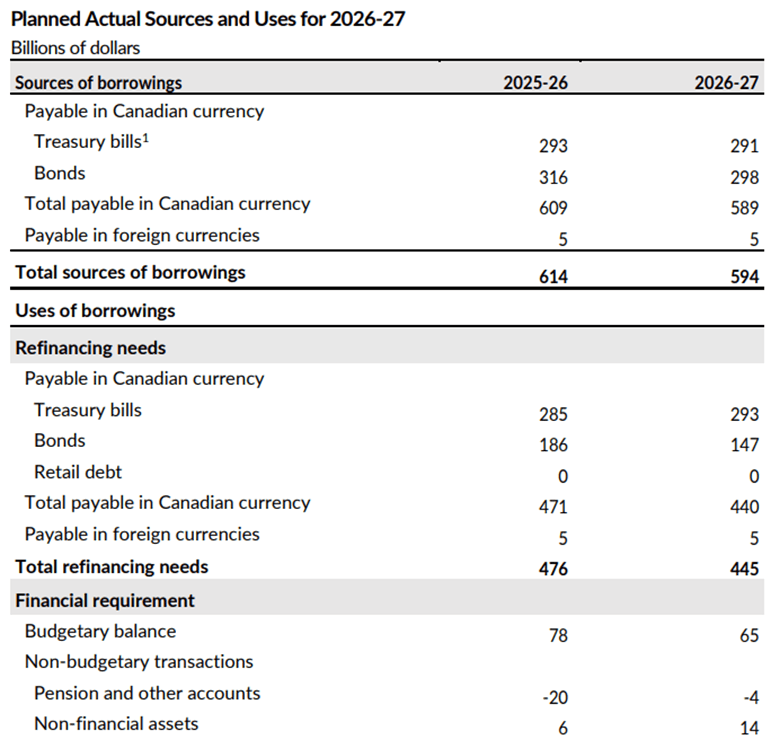
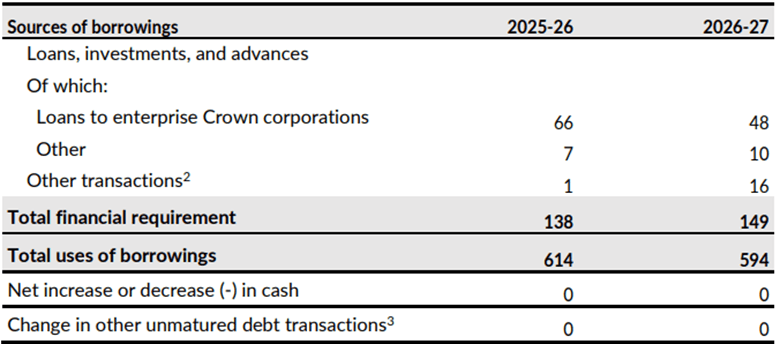
The aggregate principal amount of money to be borrowed by the government in
2026-27 is projected to be $594 billion, down from $614 billion in 2025-26.
Seventy-five per cent of the total borrowings will be used to refinance maturing
debt. This level of borrowing is consistent with the current legislated limit of
$2,126 billion set out in the Borrowing Authority Act.
Actual borrowings for the year may be higher or lower than expected due to
economic and fiscal outcomes differing from projections, the timing of cash
transactions, and other factors such as changes in foreign reserve needs and Crown
corporation borrowings. To adjust for these unexpected changes in financial
requirements, debt issuance can be altered during the year, typically first through
changes in the issuance of treasury bills. The government may also adjust issuance
for bonds in response to larger changes or shifts in market demand.
Foreign Borrowing
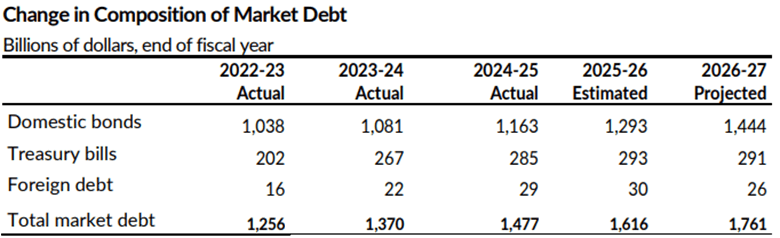
Composition of Market Debt
Canada Mortgage Bonds
The Government of Canada, as part of its agenda to catalyse major investments in
housing and to build homes at a rate not seen since the Second World War, will
increase the Canada Mortgage Bonds (CMB) annual issuance limit from $60 billion
to $80 billion, starting in 2026. The increase in this cost-effective funding will solely
apply to multi-unit housing.
The government will maintain the current pace of its purchases of CMBs, up to
$30 billion annually, to allow the private market full access to the additional
issuance.


