MNI BOC WATCH:Pause Signaled After 2nd Cut, CPI Seen On Target
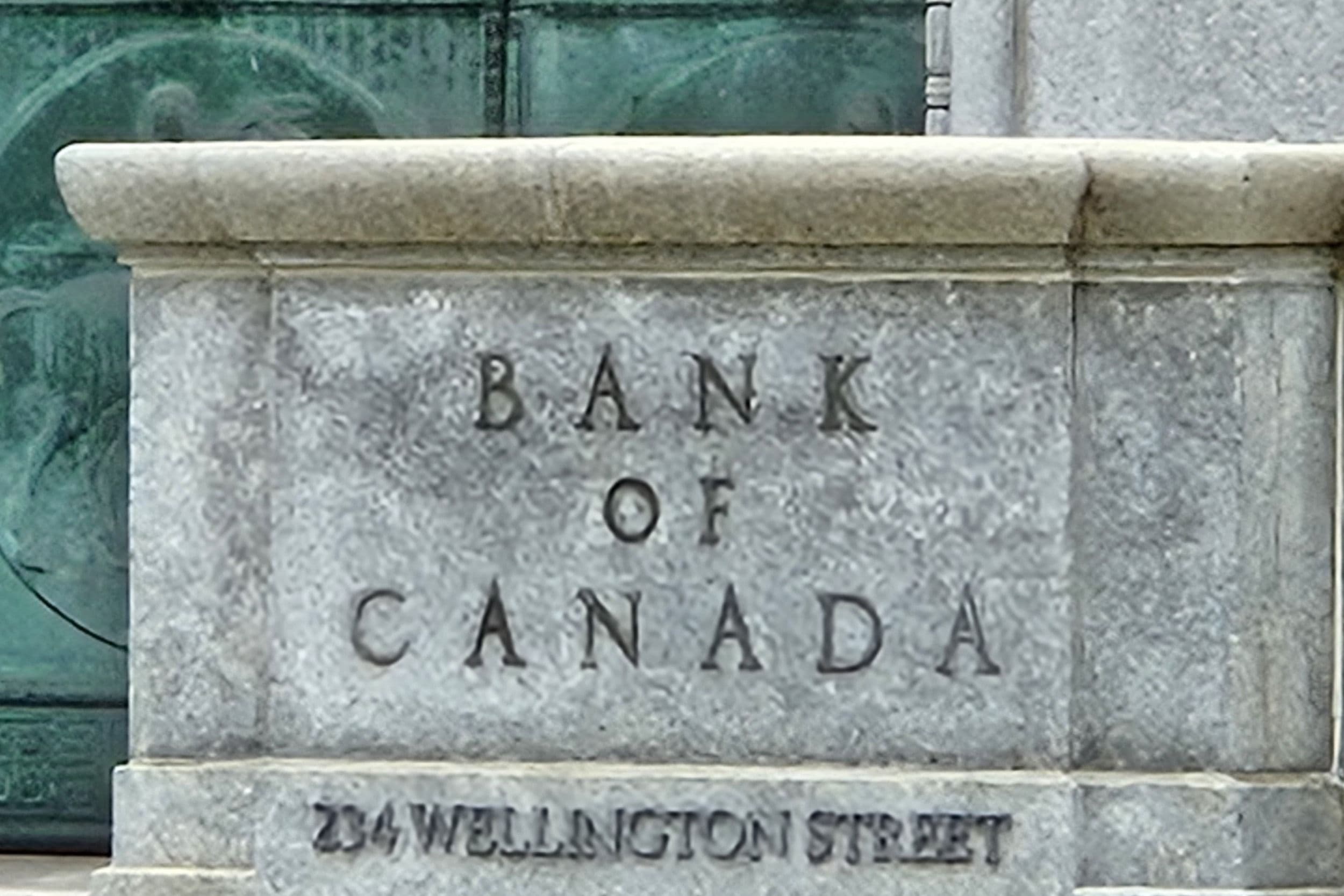
Bank of Canada Governor Tiff Macklem signaled he's about done lowering interest rates after moving for the second meeting in a row Wednesday, citing evidence inflation is settling around target as the U.S. trade war hurts jobs and growth.
"If inflation and economic activity evolve broadly in line with the October projection, Governing Council sees the current policy rate at about the right level to keep inflation close to 2% while helping the economy through this period of structural adjustment. If the outlook changes, we are prepared to respond," according to a statement from Ottawa. The policy rate was lowered a quarter point to 2.25% as expected by economists surveyed by MNI, though many have said another cut is needed in coming months.
The decision comes days after General Motors and Stellantis cut production at Canadian factories and Donald Trump broke off talks with Prime Minister Mark Carney, underlining the trade war's hit. The Bank predicts "weak" annualized growth around 0.75% in the third and fourth quarters of this year, and 1.1% in 2026, which officials say will lead to persistent slack.
That will hold down prices and offset costs associated with supply networks disrupted by the trade war, which Macklem said monetary policy isn't well equipped to tackle. That comment comes ahead of Carney's Nov. 4 budget where he's signaled a record deficit excluding the pandemic to foster what he's called the widest retooling of Canada's economy since World War II.
Cutting rates risks another inflation uptick with Canadians still angry about the surge to 8% in the Covid rebound. The scale is less intense but Macklem noted core indexes remain "sticky" around 3% though he said upward pressure is fading. The Governor reiterated underlying inflation is more like 2.5%, and he said overall price pressures should fade in coming months.
Canada dropped some retaliatory tariffs in September and along with other signs of more modest global trade penalties, the Bank halved its estimated boost to the level of the CPI from tariffs to 0.4%.
Still, the Bank's latest quarterly surveys show the majority of business leaders see inflation above 2% target over the next two years and consumer views of CPI are all above 3%. Consumer spending has also held up this year even as the economy weakens.
With unemployment at the highest in a decade outside the pandemic the Bank said U.S. trade actions and related uncertainty are having "severe effects on targeted sectors including autos, steel, aluminum, and lumber." Macklem also noted the Bank has cut rates not just twice in a row but four times this year. The policy rate has declined from a peak of 5% and is now at the bottom of the Bank's estimated neutral range.
While the Bank switched back to a regular forecast Wednesday after several outlooks based on scenarios of the trade war officials stressed the backdrop could change again. "The range of possible outcomes is wider than usual -- we need to be humble about our forecast. If the outlook changes, we are prepared to respond," Macklem said.
Beyond the trade war Bank staff identified a potential tightening of global financial conditions as a downside inflation risk, pointing to the boom in artificial intelligence and danger from big government borrowing. "Long-term government bond yields could rise in response to the rapid increase in government debt around the world. This would lead to higher borrowing costs for Canadian households and businesses."
Canada's dollar, which has been strong against the U.S. currency this year, was also cited in the Monetary Policy Report as an upside inflation risk because "a depreciation of the Canadian dollar would increase the price of imports, adding to business costs and consumer prices."


