UK FISCAL: VAT increase impacts on fiscal, CPI, monetary policy (2/2)
Sep-29 08:42
- We do not think that the MPC would be able to fully look through a VAT increase and continue to cut Bank Rate. It would likely lead to a pause, in our view, and even by placing a question mark over the feasibility of a VAT hike over the weekend might be enough to spook the MPC's swing voters to vote to keep Bank Rate on hold in November (albeit there is not much priced for this prospect by markets anyway - and we still think the chance is under-priced even given the weekend's news).
- The MPC is very focused on where headline CPI goes in the short-term and its impact on to inflation expectations. Particularly with food prices having increased notably and with continued commentary that the weekly supermarket shop, household energy and petrol prices have an outsized impact on inflation expectations it is important to note that of the "food and non-alcoholic beverages" category around 20% is subject to VAT. For the broader "food, alcohol and tobacco" category this rises to 40%.
- So if there was a VAT increase the MPC may want to wait to see how higher CPI data in Q1 filter through to inflation expectations and potentially even wait for more hard data on wage settlements in Q1 / April 2026. This could potentially even push a cut even later than April (as a lot of the wage data will not be fully available until June). Terminal rates may not be impacted, but timing almost certainly would be, in our view.
- The MNI Markets team thinks that an increase to the basic rate of income tax would be more appropriate for the economy than an increase in VAT. And despite this increasing tax on "working people" it would likely be better than the alternative of constant tinkering around the edges and only leaving another small c. GBP10bln of fiscal headroom, which would be vulnerable to more speculations over more tax increases next year.
- Chancellor Reeves may make more media appearances this morning ahead of her midday Labour Party Conference address.
Want to read more?
Find more articles and bullets on these widgets:
Historical bullets
RATINGS: S&P Upgrades Portugal To A+ From A
Aug-29 20:28
S&P has upgraded Portugal's long-term credit rating to A+ from A, with a stable outlook (had been positive).
- This is the 7th S&P upgrade for Portugal, from a low of BB in 2012-15. Only four ratings are higher (AA-, AA, AA+, AAA). This is the same rating as Slovakia, and just above Spain (A) per S&P.
- Per Bloomberg: "*S&PGR UPGRADES PORTUGAL TO 'A+' ON LOWER DEBT; OUTLOOK STABLE"
STIR: Still Eyeing September And December Cuts
Aug-29 20:16
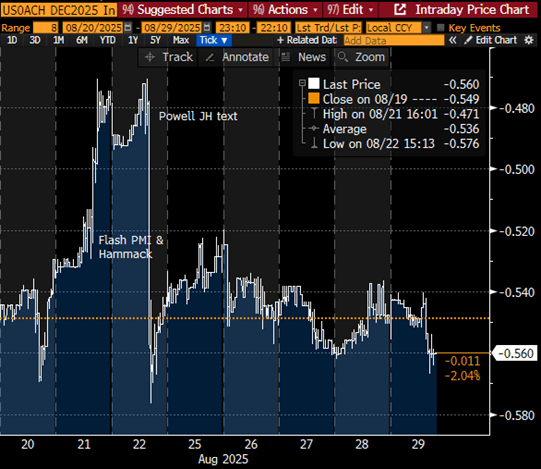
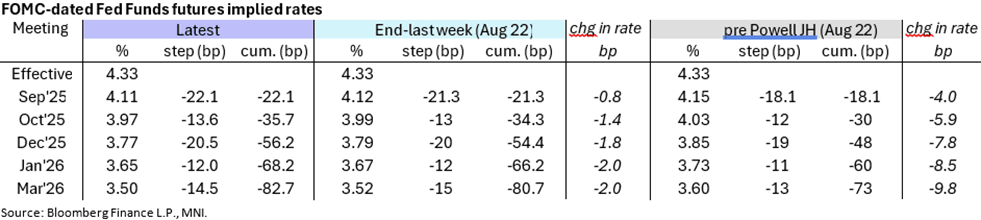
With few market-moving data points this week, implied Fed rate cuts essentially held onto their post-Jackson Hole upward repricing, adding a couple of basis points of easing for good measure heading into the Labor day weekend.
- Indeed, the lack of movement is somewhat remarkable given this week's extraordinary "firing" of Fed Governor Cook, which is currently being fought out in the courts. In all it probably added to the dovish tone on the near-term rate outlook post-Jackson Hole but not substantially so, at least so far.
- The current path sees a September rate cut priced with nearly 90% implied probability, with 56bp of cuts through end-year (a cumulatively priced second cut in December) and 83bp through March 2026 (3+ cuts).
MACRO ANALYSIS: MNI US Macro Weekly: One Week, Two Labor Days
Aug-29 20:10
We've just published our latest US Macro Weekly - Download Full Report Here
- A busy pre-holiday week for data brought mixed economic signals and little net change in Fed easing expectations, putting next week’s labor day – Friday with its nonfarm payrolls report, of course, with apologies to Monday’s federal holiday – in focus for the FOMC and market participants alike.
- Second-quarter GDP was revised up by more than expected in the second reading, to 3.3% Q/Q SAAR, driven by better-than-previously estimated domestic demand but still leaving 1st half growth in slightly weaker territory vs last year. That said, the Atlanta Fed's Q3 GDPNow estimate jumped to 3.47% (though the implied contribution from net exports in the quarter looks somewhat dubious, as we explain).
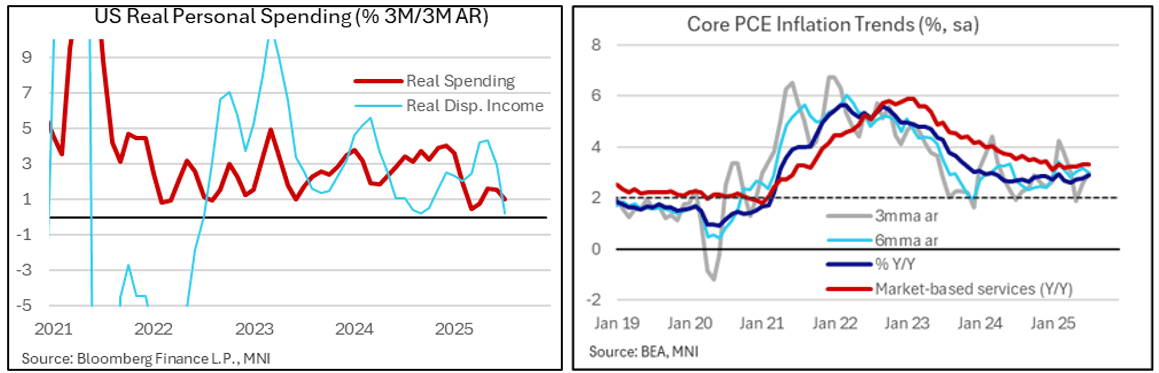
- The other major release of the week was July's Personal Income and Outlays report, which showed a modest uptick in income and spending on the month. However, the broader trends remain mixed at best, as real disposable income growth remains soft and services consumption is failing to regain traction.
- Core PCE inflation was close to expectations in July as the Y/Y accelerated to 2.9% for its fastest since February as it moves further away from recent lows of 2.6% having stalled above the 2% target. Recent trend rates are a little hotter but the median FOMC member will still need to see a further acceleration to meet their 4Q25 forecasts from June.
- Labor data were mixed. Latest jobless claims were in line to slightly better than expected, with initial claims trending a little higher but still impressively low whilst continuing claims are broadly plateauing after sharper increases in 1H25. But within the Conference Board consumer survey, the labor differential edged lower again, suggesting a continued upward trend in the unemployment rate.
- Elsewhere: regional Fed activity surveys were individually mixed, but combined generally showed an improvement in both manufacturing and services activity albeit with continued upside price pressures.
- Consumer sentiment (UMichigan and Conference Board surveys) and housing activity remained soft.
- Apart from Gov Waller again making the case from rate cuts, other FOMC colleagues who commented this week were a little more guarded when it came to the need for easing, to our ear.