SNB: MNI SNB Review - December 2025: Remaining Neutral
FULL REPORT HERE (incl. a rough transcript of the post-announcement press conference Q&A and 17 analyst views on the decision)
Executive Summary:
- SNB held its policy rate at 0.0%, meeting market and analyst consensus
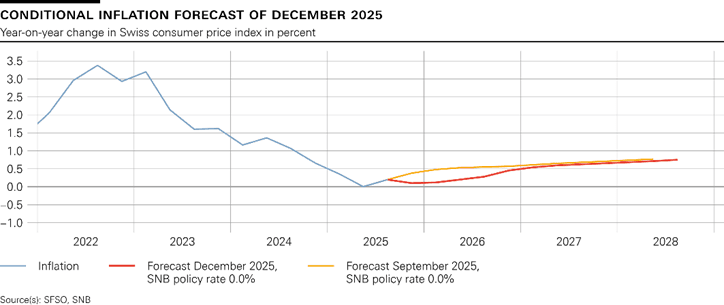
- The conditional inflation forecast was broadly unchanged at the key end-of-horizon
- Over the short term, the inflation forecast was downwardly revised, reducing room for an undershoot which in isolation may have pointed towards further easing. The message here could be that despite low readings incoming, the SNB’s conviction for a medium-term CPI uptick remains firm
- In the press Q&A, Schlegel refrained from giving forward guidance, drawing attention to the bank’s meeting-by-meeting approach, but gave the impression a cut into negative territory remains quite far away
- Market pricing was little changed over the decision announcement and press Q&A. Some chance of a hike by September 2026 continues to be implied, which was initially prompted by the global core FI repricing seen this week
Want to read more?
Find more articles and bullets on these widgets:
Historical bullets
EQUITY OPTIONS: EU Bank Call Spread
SX7E (19th dec) 250/260cs, bought for 2.35 in 3k.
SOFR OPTIONS: BLOCK: Dec25 SOFR Call Spread
- 10,000 SFRZ5 96.50/96.62 call spds, 0.25 at 0630:11ET
EU-UK: BBG-UK Rejects EU Demand For EUR6.75bln To Join SAFE Procurement Program
Bloomberg News reports that the UK is set to reject a demand of up to EUR6.75bln from the European Commission to join the EU's Security Action for Europe (SAFE) military procurement program. The report claims the Commission wants EUR4-6.75bln from the UK, in addition to a EUR150-250mln administration fee to join the programme. The UK gov't said in a statement that, “We will only agree deals that provide value to the UK and UK industry. Nothing has been agreed, and we will not give a running commentary on ongoing talks.”
- UK defence contractors stand to benefit from entry into SAFE, as member states would be allowed to borrow from a EUR150bln pot backed by the EU's budget to invest in defence capabilities. At present, only components from the EU, Ukraine, or EFTA states qualify for SAFE funds, but there have been efforts to bring non-EU NATO states such as the UK, Canada and Turkey into the program.
- There is a notable split among EU members. Many Russia hawks, notably on the EU's eastern flank, advocate allowing the UK to join as soon as possible with few conditions, claiming that the UK's sizeable defence industry would facilitate a faster military buildup, crucial in the face of continued Russian hybrid attacks and aerial incursions.
- Others, led by France (which has its own large defence industry) argue that SAFE must favour EU firms to boost the Union's strategic autonomy and reduce reliance on other actors such as the US and UK.


