MNI: Most Firms Pass Through Some Or All Tariffs - NY Fed

Most businesses in the New York-New Jersey region are passing along to customers some or all increased costs related to higher tariffs, according to a survey from the Federal Reserve Bank of New York published Wednesday.
The May survey of businesses in the region asked firms about the tariffs they faced, changes in imports goods prices as well as the extent of tariff pass-through.
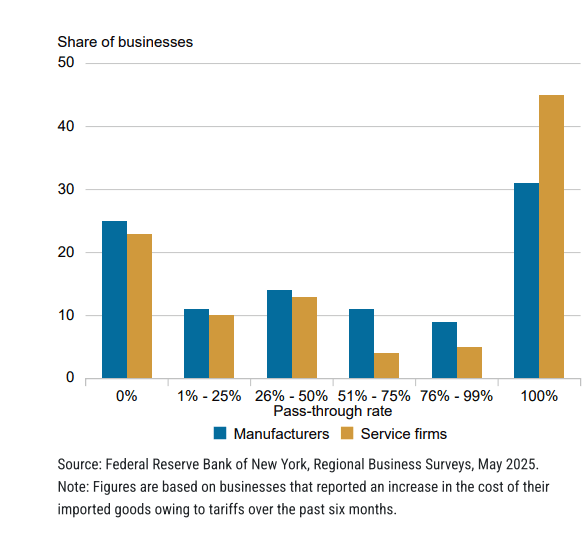
"Results indicate most businesses passed on at least some of the higher tariffs to their customers, with nearly a third of manufacturers and about 45% of service firms fully passing along all tariff-induced cost increases by raising their prices."
About a quarter of firms said they were absorbing tariff-linked cost increases and keeping prices steady. The survey was conducted between May 2 and May 9, before the reversal of many of President Donald Trump's more extreme tariff rates.
Fed officials have said monetary policy is well positioned to deal with risks posed by trade policy changes to both sides of the central bank's dual mandate to maintain stable prices and maximum employment.
The prospect of high pass-through rates from tariffs could give policymakers another reason to sit on the sidelines for now while waiting for greater clarity on the economic effects of the trade war.
"While our survey suggests that three-quarters of firms that saw tariff-induced cost increases were passing on at least some of these cost increases to their customers, businesses found it difficult to determine exactly what tariffs they were paying. While input cost increases were common, how much of the increase was from tariffs was not always transparent when businesses purchased imported goods," the New York Fed said. "Thus, some of what we estimate as tariff pass-through may include other forms of cost
increases."
At the same time, the report highlighted a possible hit to employment from tariff hikes.
"There were some signs that the sharp and rapid increase in tariffs affected employment levels and capital investments. Adjustments to headcounts were fairly modest but slightly tilted toward a small reduction among both manufacturers and service firms."