MNI INTERVIEW: US Price Expectations Jump On Iran War - UMich
Consumer sentiment was improving in late February prior to the Middle East war but quickly soured with price expectations surging as the conflict broke out, the head of the University of Michigan's Survey of Consumers told MNI.
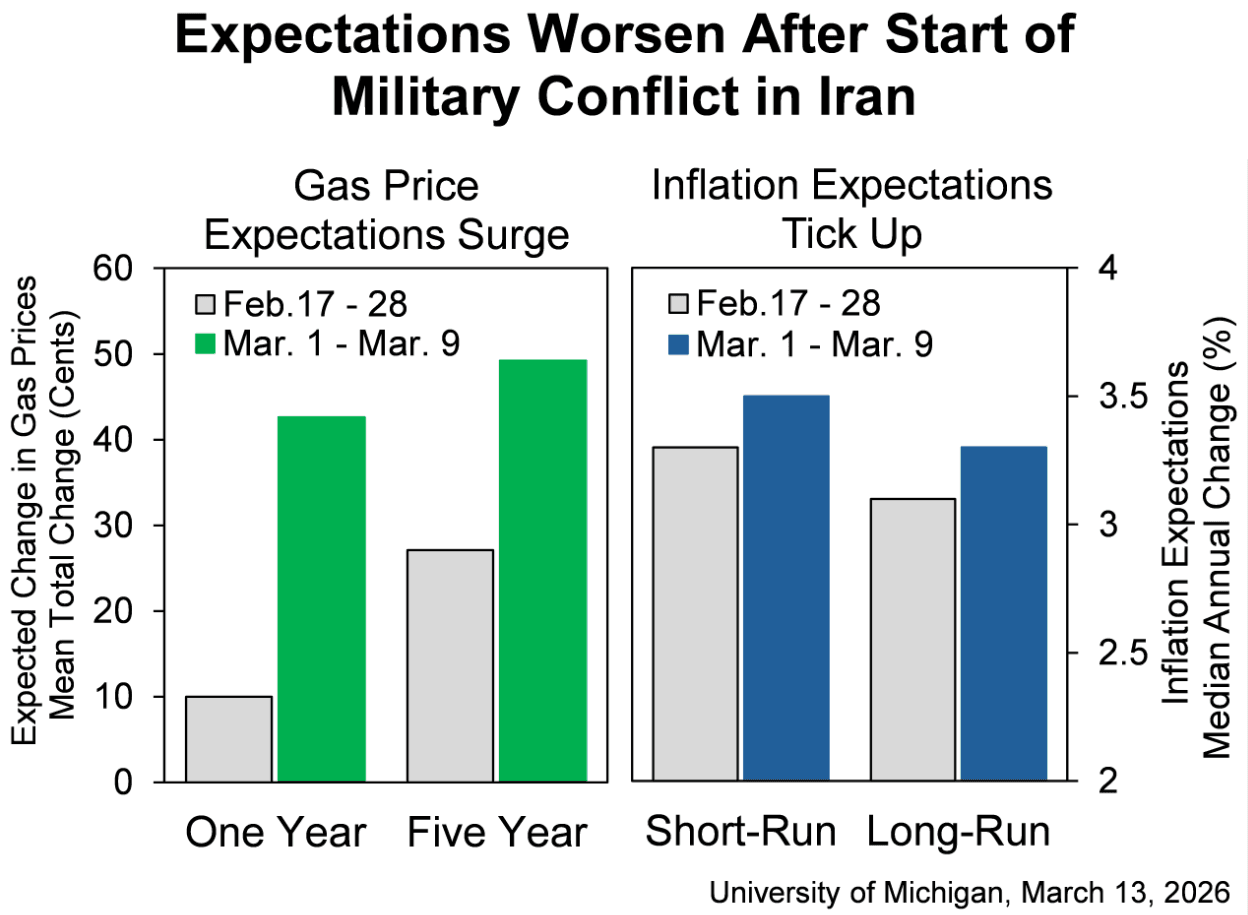
"We had an enormous surge in gas price expectations after the conflict began," Joanne Hsu said in an interview after releasing the preliminary March report. One-year gas price expectations are the highest since 2022 when Russia invaded Ukraine, she noted.
"It's really notable that we saw this pick up after the conflict began. People are starting to re-assess," she said. "Consumers have been moderating their inflation expectations more or less over the last year."
This new environment shows the complexity of balancing the Fed's dual mandate, Hsu said. "We're seeing weakness on the unemployment side of the dual mandate, and we're seeing some pretty strong upside risk on on the inflation front. Even though inflation expectations were trending in the correct direction over both time horizons, they were still above what we were seeing in the years leading into the pandemic."
Hsu, a former principal economist at the Fed board's division of research and statistics, said a key determinant of future consumer views will be the labor market.
NOWHERE NEAR AS STRONG
"If labor markets weaken, if incomes weaken, if income prospects are poor, then the major factor that supported consumer spending previously just isn't there anymore." (See: MNI INTERVIEW: Fed On Pause Amid Two-Sided Risks - Rosengren)
The University of Michigan’s Consumer Sentiment Indicator fell 1.9% on the month to 55.5. The Current Economic Conditions index was up 2.1% in the month to 57.8 while the Index of Consumer Expectations fell 4.4% to 54.1. Interviews were collected between February 17 and March 9, with half completed after the Iran conflict began.
The war had less impact on other aspects of consumer views when compared to the immediate reaction on gas prices and inflation expectations, Hsu said. There was weakness in expected personal finances she said, and it's down 7.5% month over month.
Consumers have less chance of relying on the hot job market to help with inflation than was seen when Russia invaded Ukraine, she said. "Labor markets are nowhere as strong as they were during that period."