MNI US Macro Weekly: The FOMC Has Its Independence Day

May-01 16:54By: Chris Harrison
USJerome PowellKevin WarshISM Manufacturing Index+ 3
Hidden PDF
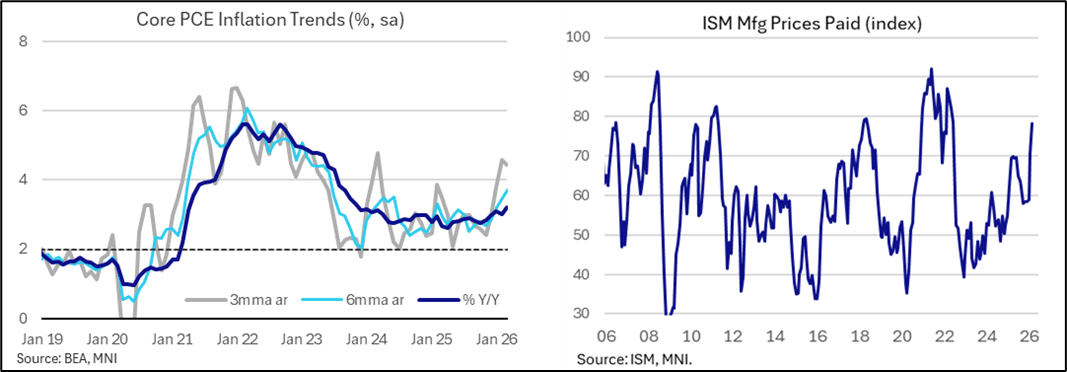
- Core PCE inflation of 0.29% M/M in March was a little higher than the median unrounded estimate but tallied with a technical point on the BEA’s choice of source data for legal services.
- It continues a strong run of monthly prints after an average 0.37% M/M through Dec-Feb and won’t give much comfort for an increasingly cautious Fed as policymakers brace for the price impacts of the Iran war.
- Consumption dynamics looked a little more solid in March and in Q1 than previously estimated, though both spending and income remain a concern in real terms as inflation picks up. War-related cost pressures are likely to continue to weigh on real spending gains in Q2.
- Real GDP growth came in at a respectable 2.0% annualized in the first Q1 release, between consensus at 2.3% and 1.2% from Atlanta Fed’s GDPNow. It was supported by a renewed surge in business investment.
- Weekly labor indicators were strong, with initial jobless claims surprisingly dropping to the lowest single week since 1969 and the ADP pulse running at ~160k in recent weeks despite a downward revision.
- The ISM Manufacturing PMI held steady in April at 52.7, a disappointment vs the expected rise to 53.2 and headlining a survey that showed multiple adverse impacts from the war in the Middle East.
- Conference Board consumer confidence surprisingly increased in April, still on the low side compared to recent years but less pessimistic than U.Mich sentiment which hit a series low in April.
- The goods trade deficit in March stood at a fresh low since the 1990s on a twelve-month rolling basis.
- Fed communications at Powell’s last meeting as Chair had two major undercurrents: i) a vocal assertion of policy independence from political influence and ii) the door to further rate cuts appears to be closing with current FOMC members looking increasingly reluctant to support a continuation of the easing cycle regardless of the preferences of the incoming Chair.
- There were hawkish dissents from Hammack, Kashkari and Logan (three of the four regional Fed presidents voting in 2026) with regards to the easing bias in the statement, whilst Miran wanted a 25bp cut.
- 2026 cuts have almost been fully priced out whilst there is a very mild hiking bias into 2027. Rate moves continue to be highly susceptible to de-escalation hints in US-Iran rhetoric, and whilst WTI has pulled back off mid-week highs it’s still north of $100/bbl.
- Next week sees ISM Services on Tuesday and Treasury’s QRA on Wednesday (plus borrowing estimates on Monday as usual) before the April nonfarm payrolls report on Friday.