EM LATAM CREDIT: Ecuador: Investor Meetings - Neutral
(ECUA; Caa3/B-/CCC+)
A spokesperson for the Ecuador finance ministry said that the meetings don't imply a bond sale is imminent and the purpose of the meetings organized by Citigroup are to explain govt initiatives, especially the cut in the diesel fuel subsidy which has sparked large scale riots in the country.
ECUA 35s rose 1.7 points today and are up 5 points since June 30th as people still appear optimistic that the government will withstand the protests and stand firm on their fuel subsidy policy.
Cutting the fuel subsidy is part of the fiscal reform agreed to with the IMF as stipulated in their loan program but also the govt said that the subsidized fuel is used for fuel trafficking as well as used by organized crime as cheap fuel for illicit operations.
Finance Minister Sariha Moya and Vice Minister of Finance Gary Coronel are expected to attend the meeting this Thursday. Ecuador has said that it is planning to issue a bond backed by a guarantee from a multilateral lender later this year and plans to return to markets in 2026, according to Bloomberg.
Want to read more?
Find more articles and bullets on these widgets:
Historical bullets
FED: NatWest Now Sees Cuts In 2025, Starting In September
As with Deutsche earlier, NatWest has changed its Fed call after the Powell Jackson Hole speech to reflect a 25bp September cut. Previously, the call was for no cuts in 2025. The new baseline outlook includes further 25bp cuts in December and March, bringing rates closer to neutral ("however, the changing composition of the committee becomes far less clear once Powell term expires in May").
- "While the August jobs and CPI reports will be watched carefully, it is clear to us that Powell has already seen enough to decide renewed action to counter downside economic risks is likely warranted, and so we now look for a 25 basis point rate cut on September 17th.
- "We expect officials will very much downplay the likelihood of a 50bp rate cut leading up to the jobs data, but we have to admit if the report is "weak enough" (e.g., the unemployment rate increases by 0.3pct to 4.5% (where officials had it at year end) anything can happen and wouldn't rule anything out. However, given the latest pivot and with financial markets pricing (86% of a 25bp rate cut) a lot has to happen (unemployment rate 3-handle and core CPI +0.5%) for the FOMC to undeliver and hold off from a rate cut in September. "
USDCAD TECHS: Bull Cycle Hindered
- RES 4: 1.4111 High Apr 10
- RES 3: 1.4019 38.2% retracement of the Feb 3 - Jun 16 bear leg
- RES 2: 1.3968 High May 20
- RES 1: 1.3925 High Aug 22
- PRICE: 1.3840 @ 16:55 BST Aug 22
- SUP 1: 1.3794 20-day EMA
- SUP 2: 1.3769/22 50-day EMA / Low Aug 22
- SUP 3: 1.3576 Low Jul 23
- SUP 4: 1.3557/40 Low Jul 3 / Low Jun 16 and the bear trigger
Gains this week in USDCAD and the breach of resistance at 1.3879, the Aug 1 high, marked a positive development, however the slippage into the Friday close undermines this sentiment - for now. Moving average studies have crossed and are in a bull-mode position, reinforcing current conditions. An extension higher would signal scope for a climb towards 1.4019, a Fibonacci retracement. On the downside, support to watch lies at 1.3769, the 50-day EMA - a level not yet challenged by the correction lower.
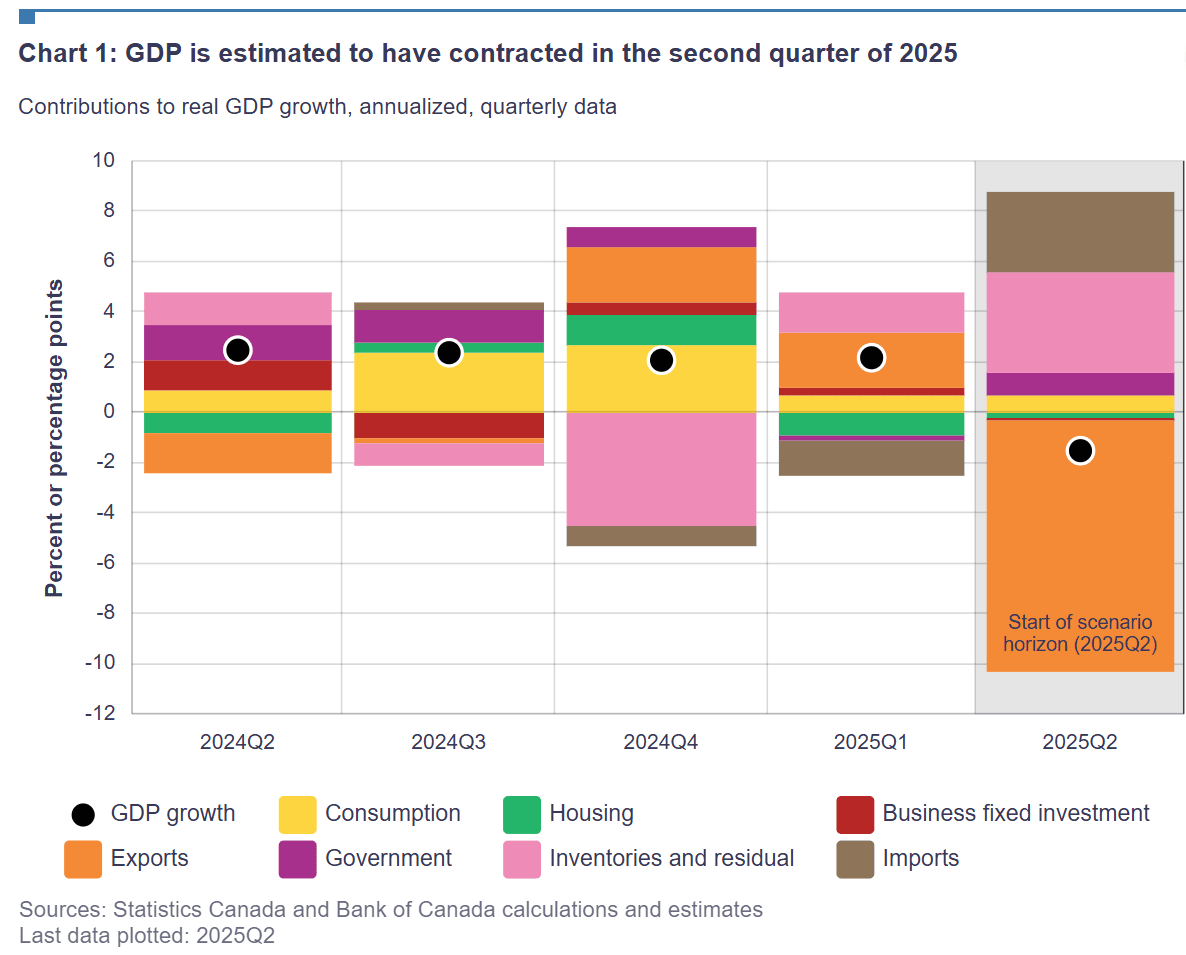
CANADA: Q2 Expected To See GDP Contraction, BOC's Estimate Looks Too Negative
The June retail sales release helps wrap up the last major data before Canadian Q2 GDP is released on Friday August 29.
- Current Bloomberg analyst consensus shows Q2 is expected to show a 0.7% Q/Q annualized contraction, versus +2.2% in Q1. The private sector consensus is more optimistic than the Bank of Canada's -1.5% estimate in its July Monetary Policy Report (which MNI thinks is too low) but the component-by-component breakdown is similar if of differing magnitudes.
- Widely expected are: a softening in household consumption growth (+1.2% in Q1), with a pickup in government spending, continued weakness in fixed investment (-3.0% in Q1) though with residential outperforming business capital formation, and a reversal of Q2's positive contribution from net exports. In short, the data are expected to confirm that trade activity was brought forward to Q1 ahead of tariffs, with the effects reversing in Q2.
- Going forward, the BOC envisages growth resuming in Q3 (+1.0% in its "current tariff" scenario). In the meantime, a weak Q2 reading could provide Governing Council with more conviction to resume easing rates in September, with the July meeting decision noting "If a weakening economy puts further downward pressure on inflation and the upward price pressures from the trade disruptions are contained, there may be a need for a reduction in the policy interest rate".