EM ASIA CREDIT: China Vanke (VNKRLE): Rating downgraded
(Caa3neg/CCC-*-/C)
"*FITCH DOWNGRADES CHINA VANKE TO 'C', VANKE HK TO 'CC'" - BBG
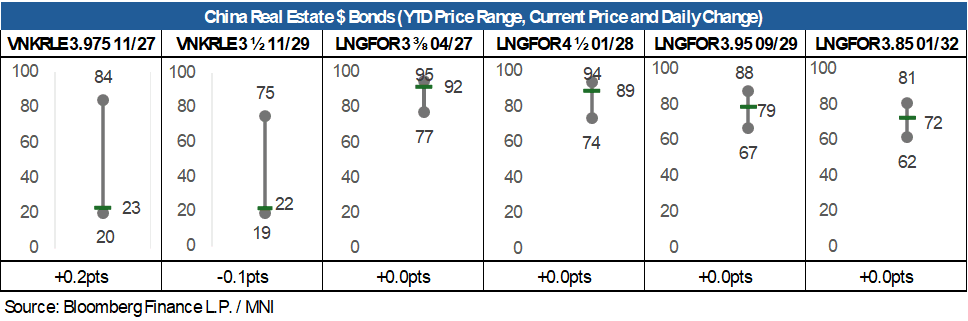
Fitch downgraded China Vanke two notches to C after market close yesterday. The agency notes the missed payment on the RMB 2bn 3% on the 15th, and its entry into the 5 working day grace period. Neutral driver for valuations.
Want to read more?
Find more articles and bullets on these widgets:
Historical bullets
RBA: 2-Way Risks, How They Develop Likely To Determine If Hold Prolonged
The November meeting minutes reiterated that the RBA’s central scenario is “in balance” with risks to both the downside and upside. How these risks will develop is likely to determine whether monetary policy stays on hold or rates are cut further and while it is “not yet possible to be confident” about which scenario will materialise, the Board will “remain cautious and data dependent”. With core inflation above target and ongoing signs of a recovery in demand, policy is likely to be on hold in December and into early 2026, depending on the data.
- It can “afford to be patient” as it watches the data and assesses what the implications for its estimates of spare capacity and the degree of restrictiveness. The October jobs data came out the week after the decision and were tentatively in line with the view of stronger growth supporting the labour market, and thus rates on hold.
- The discussion was centred on the outlook for policy beyond the November decision. Rates could be held at the current 3.6% if the recovery is stronger than expected. This could be driven by a better global backdrop or stronger household consumption due to higher incomes and wealth.
- Also, if inflation stays high or productivity weaker than expected, then the RBA could adjust its spare capacity estimates lower. Another factor keeping rates unchanged would be a change in the view that policy is still restrictive.
- It noted that “information received since the previous meeting had increased the probability” of the factors above occurring.
- The Board would ease if spare capacity increased driven by the labour market weakening “materially” especially in the “market sector” or growth turning out softer than expected due to cautious households.
JGBS: Bear-Steepening, 20YY At Fresh Cycle Highs Ahead Of Tomorrow's Supply
In Tokyo morning trade, JGB futures are weaker, -9 compared to settlement levels.
- "Japanese Prime Minister Sanae Takaichi is set to meet with Bank of Japan Governor Kazuo Ueda on Tuesday as she mulls support for an economy that shrank over the summer. The two will meet at 3:30 p.m. in Tokyo, according to the prime minister's office. The meeting comes after a report showed the Japanese economy contracted in the three months through September on a US tariff-linked slump in exports and a sharp drop in property buying." - BBG
- Cash US tsys are flat to 1bp richer, with a steepening bias, in today's Asia-Pac session.
- Cash JGBs are flat to 3bps cheaper across benchmarks. The benchmark 20-year yield is 2.1bps higher at 2.772%, a fresh cycle high, ahead of tomorrow’s supply.
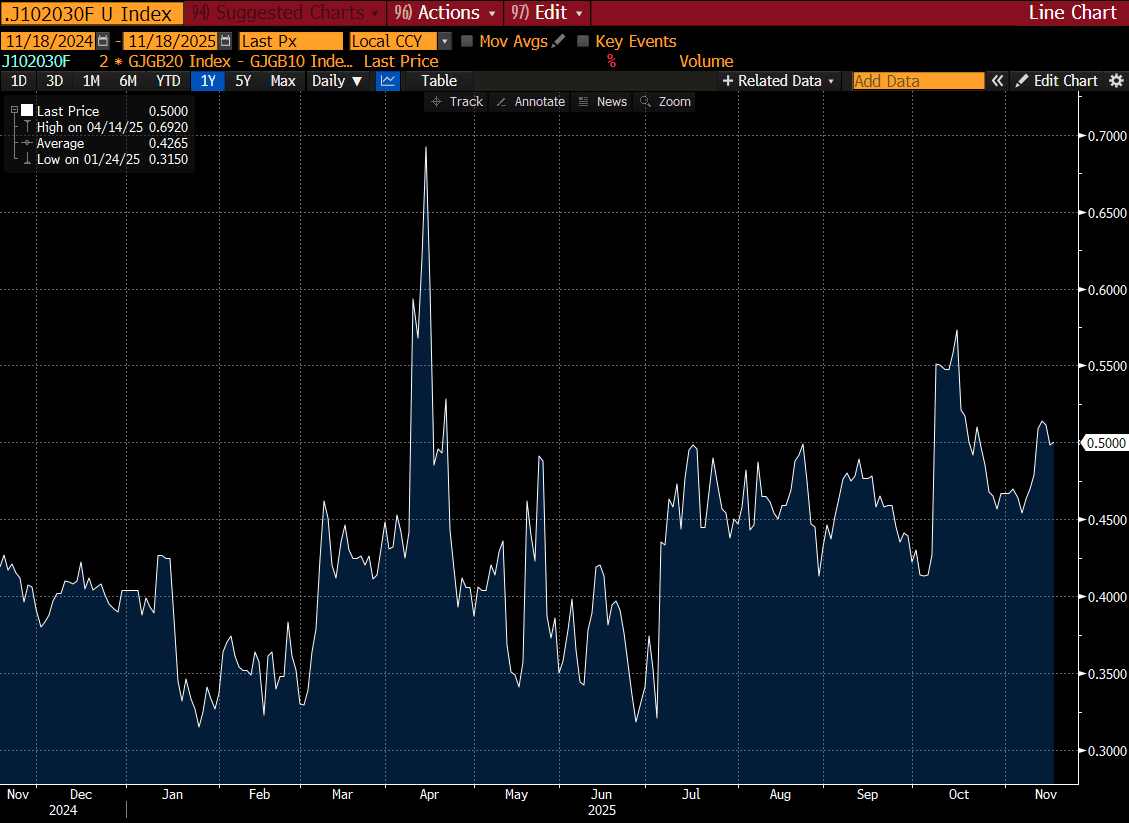
- The 20-year JGB is at a similar valuation to last month in terms of the 10/20/30 butterfly.
- Swaps have twist-steepened, with rates 1bp lower to 3bps higher.
Bloomberg Finance LP
MNI: CHINA PBOC CONDUCTS CNY407.5 BLN VIA 7-DAY REVERSE REPO TUES
- CHINA PBOC CONDUCTS CNY407.5 BLN VIA 7-DAY REVERSE REPO TUES


