US TSYS: Asia Wrap - Yields Drift Lower As A Shutdown Looms
Sep-29 04:03
The TYZ5 range has been 112-08+ to 112-14 during the Asia-Pacific session. It last changed hands at 112-13+, up 0-05 from the previous close.
- The US 2-year yield has edged lower trading 3.631%, down 0.01 from its close.
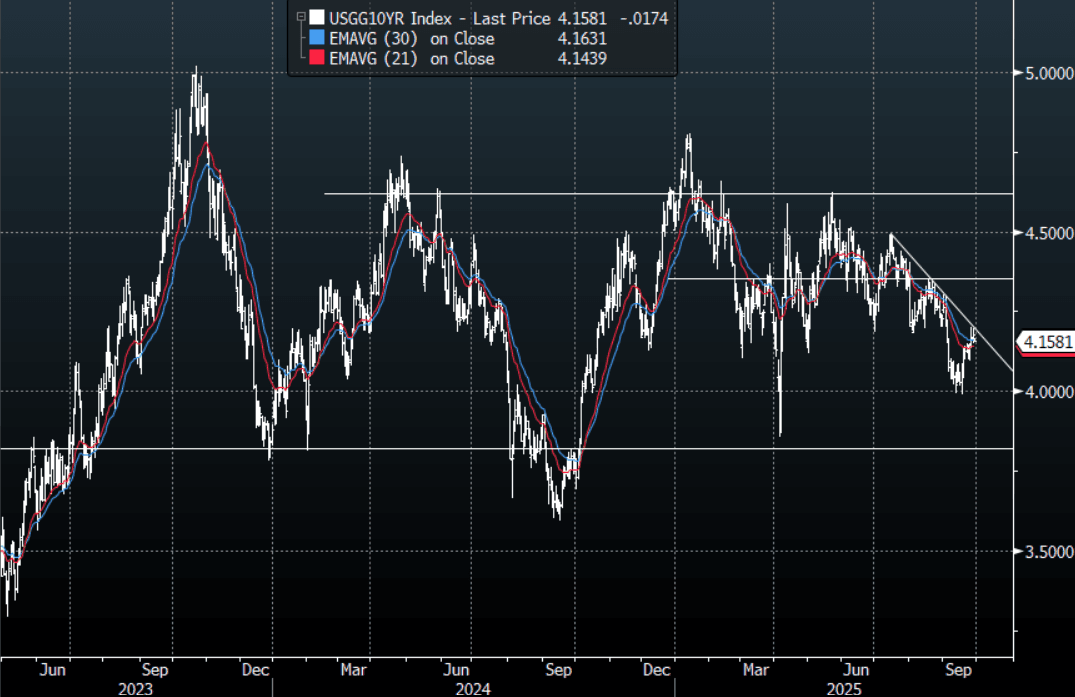
- The US 10-year yield has moved lower and is trading around 4.158%, down 0.02 from its close.
- 10-Year yields persisted with its probe of the 4.20% area on Friday night, I suspect buyers continue to be around 4.20% initially and look to fade the move higher. The jobs data if released will be key this week. The threat of a US shutdown has seen yields edge lower putting a top in place for now.
- Sean D.Emory on X: “Government shutdown headlines always spark fear. But history tells a calmer story. Looking back at every shutdown since 1976: The S&P 500 has been flat on average during shutdowns (0.0%) and actually up +0.6% the week after. The 10-year Treasury barely moves, average change of +0.03% during, then reversing after. In other words, the market tends to look through shutdown noise quickly.”
- "TRUMP TELLS CBS GOVT SHUTDOWN LIKELY UNLESS DEMOCRATS BACK DOWN, TRUMP CONFIDENT VOTERS TO SIDE WITH HIM IF FUNDING LAPSES: CBS"
- “Guy LeBas, chief fixed-income strategist for Janney Montgomery Scott. “The next thing to get priced in is probably a government shutdown, which has historically been a bad thing for short-term economic growth and pulled US Treasury yields down,” LeBas said.” - BBG
- Data/Events: Pending Home Sales, Dallas Fed Manf. Activity
Fig 1: 10-Year US Yield Daily Chart
Source: MNI - Market News/Bloomberg Finance L.P
Want to read more?
Find more articles and bullets on these widgets:
Historical bullets
RATINGS: S&P Upgrades Portugal To A+ From A
Aug-29 20:28
S&P has upgraded Portugal's long-term credit rating to A+ from A, with a stable outlook (had been positive).
- This is the 7th S&P upgrade for Portugal, from a low of BB in 2012-15. Only four ratings are higher (AA-, AA, AA+, AAA). This is the same rating as Slovakia, and just above Spain (A) per S&P.
- Per Bloomberg: "*S&PGR UPGRADES PORTUGAL TO 'A+' ON LOWER DEBT; OUTLOOK STABLE"
STIR: Still Eyeing September And December Cuts
Aug-29 20:16
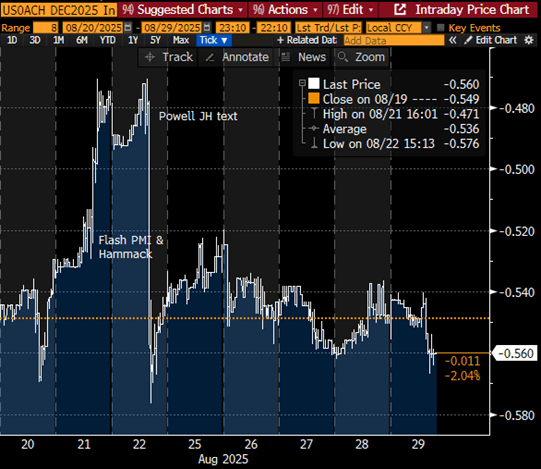
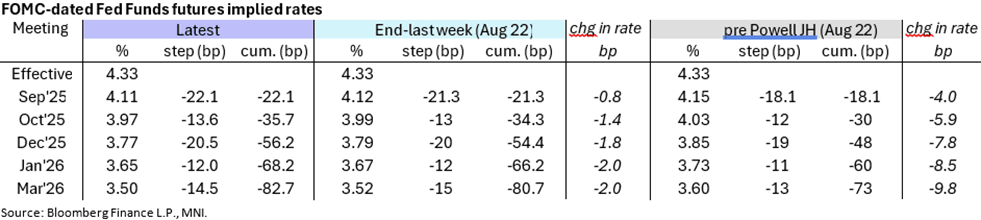
With few market-moving data points this week, implied Fed rate cuts essentially held onto their post-Jackson Hole upward repricing, adding a couple of basis points of easing for good measure heading into the Labor day weekend.
- Indeed, the lack of movement is somewhat remarkable given this week's extraordinary "firing" of Fed Governor Cook, which is currently being fought out in the courts. In all it probably added to the dovish tone on the near-term rate outlook post-Jackson Hole but not substantially so, at least so far.
- The current path sees a September rate cut priced with nearly 90% implied probability, with 56bp of cuts through end-year (a cumulatively priced second cut in December) and 83bp through March 2026 (3+ cuts).
MACRO ANALYSIS: MNI US Macro Weekly: One Week, Two Labor Days
Aug-29 20:10
We've just published our latest US Macro Weekly - Download Full Report Here
- A busy pre-holiday week for data brought mixed economic signals and little net change in Fed easing expectations, putting next week’s labor day – Friday with its nonfarm payrolls report, of course, with apologies to Monday’s federal holiday – in focus for the FOMC and market participants alike.
- Second-quarter GDP was revised up by more than expected in the second reading, to 3.3% Q/Q SAAR, driven by better-than-previously estimated domestic demand but still leaving 1st half growth in slightly weaker territory vs last year. That said, the Atlanta Fed's Q3 GDPNow estimate jumped to 3.47% (though the implied contribution from net exports in the quarter looks somewhat dubious, as we explain).
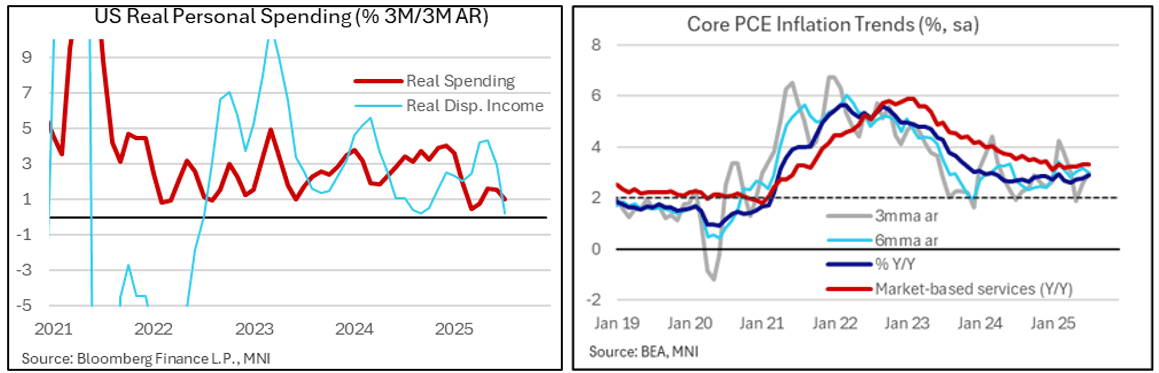
- The other major release of the week was July's Personal Income and Outlays report, which showed a modest uptick in income and spending on the month. However, the broader trends remain mixed at best, as real disposable income growth remains soft and services consumption is failing to regain traction.
- Core PCE inflation was close to expectations in July as the Y/Y accelerated to 2.9% for its fastest since February as it moves further away from recent lows of 2.6% having stalled above the 2% target. Recent trend rates are a little hotter but the median FOMC member will still need to see a further acceleration to meet their 4Q25 forecasts from June.
- Labor data were mixed. Latest jobless claims were in line to slightly better than expected, with initial claims trending a little higher but still impressively low whilst continuing claims are broadly plateauing after sharper increases in 1H25. But within the Conference Board consumer survey, the labor differential edged lower again, suggesting a continued upward trend in the unemployment rate.
- Elsewhere: regional Fed activity surveys were individually mixed, but combined generally showed an improvement in both manufacturing and services activity albeit with continued upside price pressures.
- Consumer sentiment (UMichigan and Conference Board surveys) and housing activity remained soft.
- Apart from Gov Waller again making the case from rate cuts, other FOMC colleagues who commented this week were a little more guarded when it came to the need for easing, to our ear.