MNI: Canada's Immigrant Clampdown Deepens BOC Conflicts

Canada faces weakened output and labor market tightening because of foreign work permit reductions, adding to risks for its central bank which is already low weak growth and danger from U.S. tariffs.
The rule change will reduce GDP growth by 0.3pp this year according to former Bank of Canada and finance official Pedro Antunes, now chief economist at Signal49 Research. Central bank officials project the economy will expand 1.1%.
Unemployment will decline half a percentage point and wage gains quicken in some industries, but it’s too soon to tell if that boosts inflation, Antunes said. The last labor report showed the jobless rate declined even as hiring fell as the labor force posted the largest-ever decline outside the pandemic.
The conflicting risks align with the Bank’s view about leaving borrowing costs on hold unless the economy lurches one way or the other, though Antunes said on balance the immigration shift creates downside risk.
“It is comfortable with keeping the policy rate where it is, at or close to neutral at the moment. And I would agree that this is a prudent choice,” Antunes said. “They are still assuming that population growth will be positive on a quarterly basis going into next year. So I would say that yes, there are downside risks” on rates.
The BOC says with labor force growth stalling after two decades of gains averaging 1.5%, there's a slowdown in growth potential to about 1%. Such shocks, combined with a tougher global trading environment, mean greater chance of policy error, Governor Tiff Macklem said in a speech Thursday. (See: MNI INTERVIEW: Trade Woes Mean BOC Stagflationary Risk-CD Howe)
BUSINESS COMPLAINTS
Transport Bourassa owner Jean Bourassa says it's impossible to find enough workers to service his fleet of 280 trucks based south of Montreal that has shipped within Canada and to places like Texas since 1956.
“I can’t plan my investment and my business buying new trucks -- every three months, it could change,” Bourassa told MNI after visiting Ottawa to press officials for relief. Some of his mechanics may have to leave in the next few months, further squeezing his business, which in the past has resorted to idling damaged trailers and delaying new truck purchases.
Former BOC staffer and independent consultant David Watt says Canada must limit reliance on cheap foreign labor, but that this makes policy more complex. "There needs to be better modelling, and more focus on their effects in monetary policy deliberations. Mis-identifying what is affecting the economy will lead to policy errors."
Canada curbed record immigration after complaints about a housing squeeze and some employers bypassing local youth to fill restaurant jobs. Bourassa and other executives want a grandfather clause for foreign workers already on the job.
“Job losses aren’t just temporary foreign workers but also residents of Quebec,” CIF Metal President Claude Blanchet told reporters. “When we lose a skilled worker it’s not just a machine that stops,” he said. “Complex production chains also; it’s our clients who pay the cost.”
A departmental spokeswoman for Minister of Jobs Patty Hajdu told MNI "employers are expected to recruit, upskill, and train domestic workers first and the Government enforces that." The immigration department declined MNI's request for comment.
Quebec's aging population means "aggressively cutting back on immigration could exacerbate labour shortages, slow down economic growth" in the province, Hidden PDF Desjardins economists Sonny Scarfone and Hendrix Vachon.
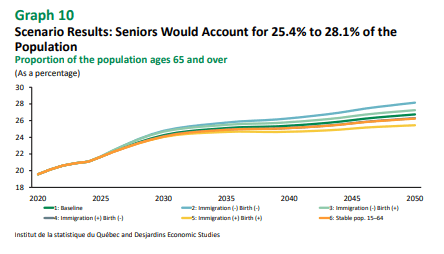
Immigration powers are shared between federal and provincial governments, and Bourassa noted the contrast with his struggles and Quebec bringing in workers linked to its own projects in public works, healthcare and staff for subsidized daycares.
“Government, they recognize they need staff and they don’t have enough but they say keep it closed for Bourassa and for the other companies.”


