MNI: Canada Sees Biggest Jobless Rate Fall In 20Y, Ex-Covid
Canada’s unemployment rate showed the biggest decline in two decades excluding the pandemic on the third consecutive month of stronger-than-expected hiring, another sign of a rebound from the shock of U.S. tariffs that's justified the central bank’s intention to end rate cuts.
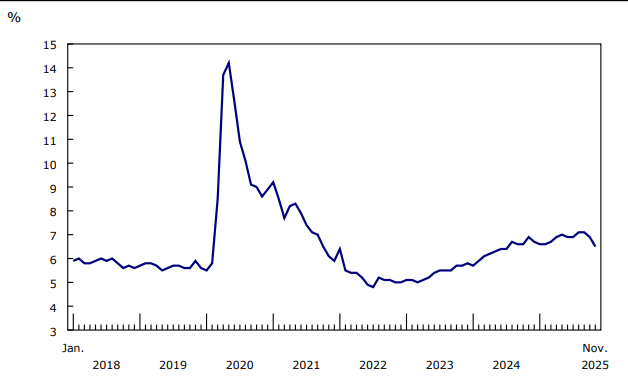
The jobless rate fell to 6.5% from 6.9% in November, the most since the same month in 2005 according to Statistics Canada figures Friday. Unemployment is now the lowest since July 2024 after peaking at 7.1% a few months ago.
The result is much better than an MNI economist survey calling for the rate to increase to 7.1%, and so was a 53,600 job gain compared with the consensus for no change. Health care and social assistance led the improvement, followed by accommodation and food services and natural resources.
Some details weren’t as rosy with lower paid part-time jobs accounting for the entire net gain while full-time positions declined 9,400. Hours worked – a proxy for GDP growth-- advanced just 1.2% in November from a year ago. That’s in line with economist views that a surprise third-quarter expansion of 2.6% won’t be sustained. The Bank of Canada predicts output will rise about 1% next year as the U.S. trade war weighs on investment and exports.
Governor Tiff Macklem cut his key rate 25bps to 2.25% Oct. 29 and said a cycle of cuts that began at 5% is likely over if his projection for modest growth and inflation holding around his 2% target is realized. (See: MNI INTERVIEW: Supply Damage Supports BOC Hold- Dal's McNeil)
One weak spot saw factory employment falling 9,300 in November, and in recent weeks layoffs at auto factories and lumber mills have made front-page news.
Prime Minister Mark Carney has signaled he expects no progress Friday lifting tariffs during any interaction with President Donald Trump around a FIFA World Cup ceremony. Trump has also suggested he could abandon a free trade pact in talks coming next year.
The lower unemployment rate was also flattered by a contraction in the labor force that comes alongside government curbs on record immigration. Public sector employment is also set to shrink by 10% over the next few years under a federal austerity plan.