US NATGAS: Hedge Fund Managers Cut Net Bullish Natural Gas Bets
(Bloomberg) -- Money managers have decreased their bullish natural gas bets by 25,414 net-long posit...
Want to read more?
Find more articles and bullets on these widgets:
Historical bullets
US LABOR MARKET: Potential Adverse Weather Impact In December Payrolls
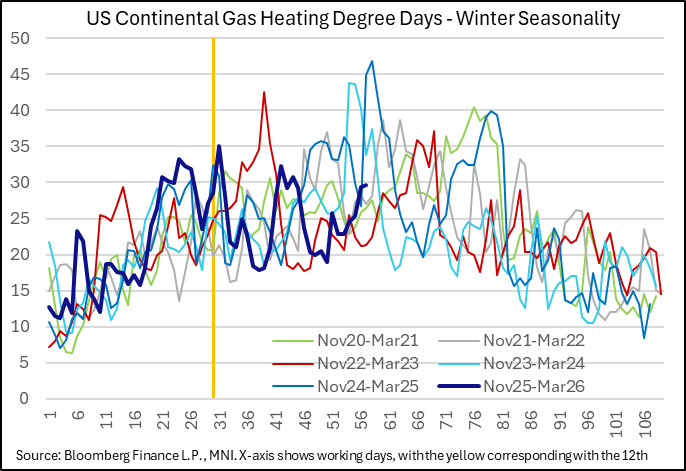
- One new shock seen in the December payrolls report compared to November could be the weather, with colder than usual temperatures generally observed around the payrolls reference period in December as well in the week leading up to it.
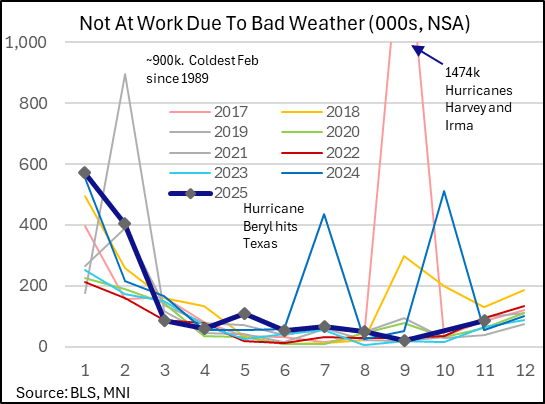
- December tends to see less weather disruption than January or February according to the specific question in the household survey.
- While it’s hard to say whether it prevented people from reaching their workplaces, it could have seen some downward pressure on industries such as construction after its unusually large positive contribution of 28k new jobs in November (second largest behind the ever-large gains for health care & social assistance) or those reliant on travel. JPMorgan for example estimate construction payrolls to have increased 5k.
- Explicit estimates for the potential weather impact on payrolls are light but Goldman Sachs highlight it as a downside risk this month.
CANADA: BoC Likely To Shrug Off Another Jobs Surprise (3/3)
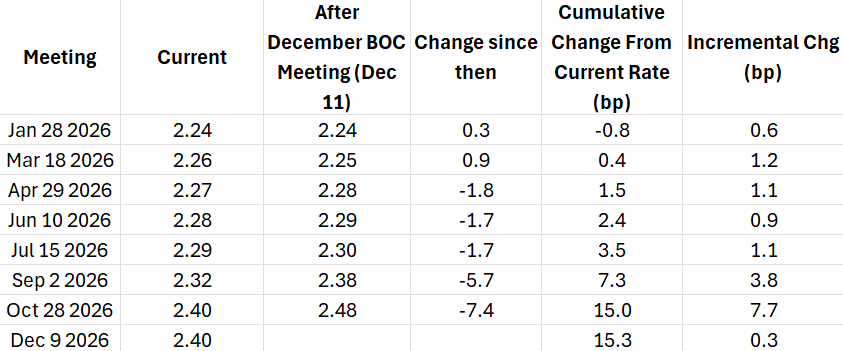
Whatever the outcome, it's unlikely to greatly sway expectations that the BoC's easing cycle is at an end and that the next move is more likely to be a hike than a cut: markets do not fully price any moves through 2026 but there are about 15bp of hikes priced by December. That said, rate hike expectations have moderated slightly since the December press conference, in line with a broader global move and largely soft non-employment Canadian economic data.
- Importantly, the BoC appears to have adopted the stance that monthly labour market data is too volatile to take much signal, and is not in any hurry to adjust policy.
- Gov Macklem at the December press conference downplayed the freshly-hot employment gains in September through November, highlighting instead expectations that growth is likely to slow in the context of a major structural adjustment: "You're seeing overall employment has moved up. So that is encouraging. There is some resilience to the economy. What I would say, though, is looking forward, it hasn't fundamentally changed our view. The Canadian economy is going through a difficult structural adjustment that is going to take some time. When you talk to companies, they're being very cautious about their investment plans. They're cautious about their hiring plans. So yes, we are pleased to see this resilience. But going forward, we continue to expect fairly modest growth."
- There will be continued scrutiny by the BoC over the reliability and durability of the employment data, with Macklem and Governing Council appearing to take a patient approach while assessing incoming data "in a symmetric way. If our outlook changes materially in either direction, either because there's a big shock, or because there's an accumulation of evidence, one way or the other, we're prepared to respond."
- A singular shock figure in December jobs shouldn't move the needle too much however, with almost no chance seen of a January rate move. The next major items on the near-term agenda are CPI and the BOC's quarterly business and consumer surveys - both released on January 19.
CANADA: Analysts See Mean Reversion In December LFS (2/3)
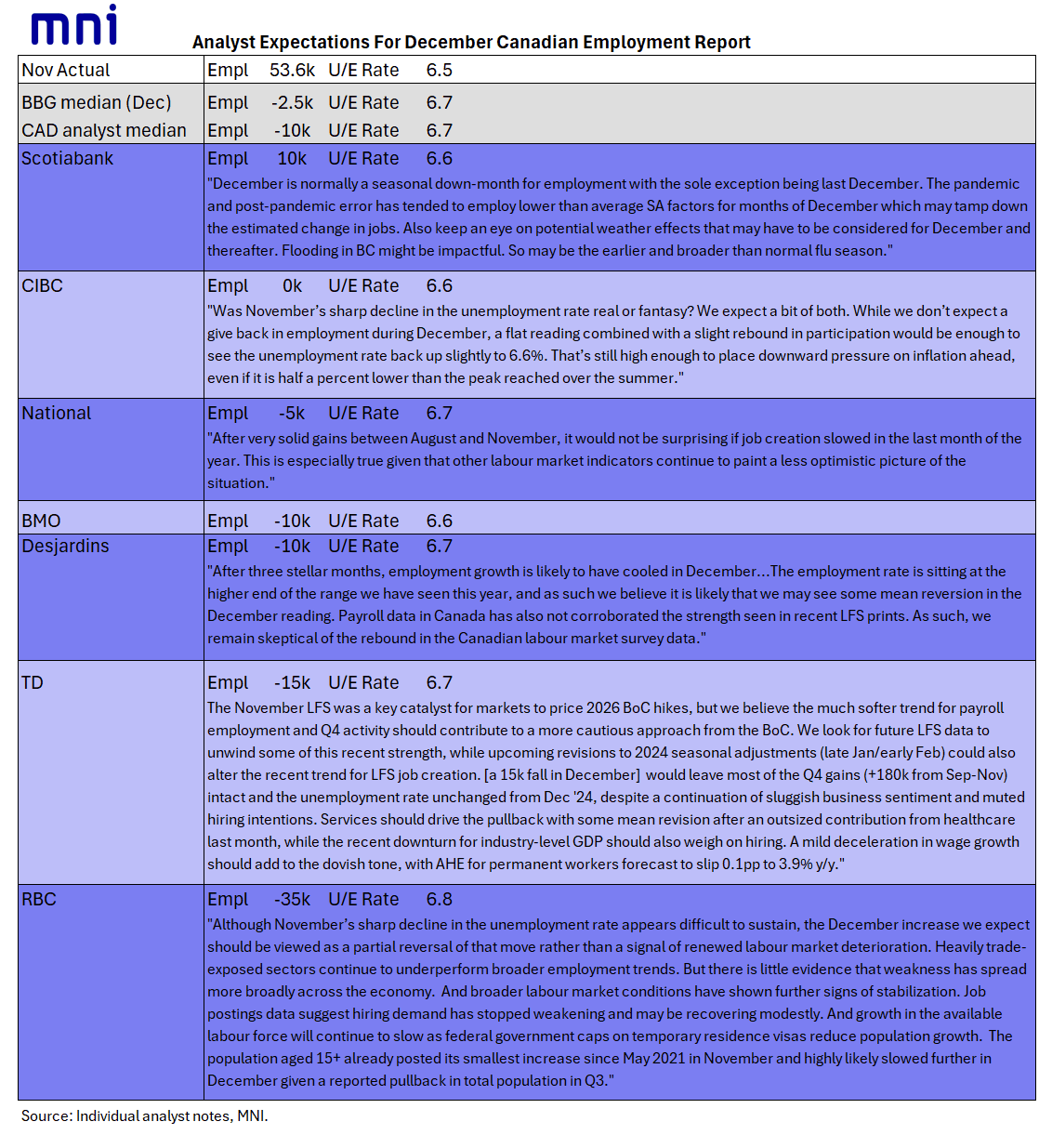
Canadian institutions see December employment in a range of -35k to +10k (+54k Nov), with unemployment seen rising to between 6.6% and 6.8% (6.5% Nov). See table in image below.
- Various factors identified as worth watching include seasonal adjustments and weather effects (including flooding in British Columbia), but overall the theme is "mean reversion" from a strong November as opposed to any particular macro driver in the pullback.
- Longer-term factors to watch in future reports include upcoming revisions to seasonal factors and demographic factors (including capped immigration).