EUR: EUR/USD - Consolidating Gains Above 1.1900 Heading Into US Employment
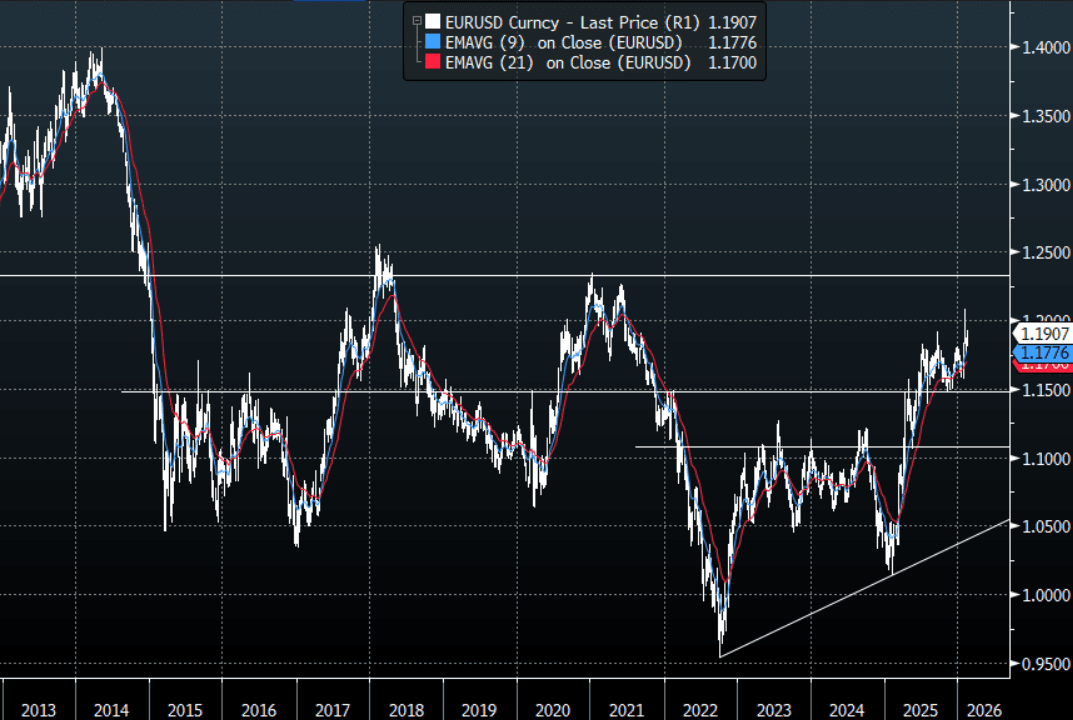
The EUR/USD range overnight was 1.1887 - 1.1929, Asia is currently trading around 1.1905. The pair is consolidating around 1.1900 as the USD comes back under pressure and we await US employment data tonight. Price action has been pretty constructive after the initial sell-off and the support just below 1.1800 proved to be solid, can it now build some momentum from that base ? On the day, the first support is back toward the 1.1860-1.1890 area and then 1.1770-1.1800.
- MNI BRIEF: ECB Villeroy: Downside Risks A Little Stronger. In an interview with Les Echos published Tuesday, Villeroy said that ECB monetary policy was in a "good place" but that did not mean the current policy stance was either comfortable or fixed, noting that "risks to the downside for price developments nevertheless seem to me to be a little stronger than the risks to the upside".
- Options : Closest significant option expiries for NY cut, based on DTCC data: 1.1825(EU1.22b), 1.2000(EU2.17b). Upcoming Close Strikes : 1.1800(EU2.68b Feb 13), 1.1850(EU3.89b Feb 13), 1.1950(EU2.36b Feb 13) - BBG
- The EUR/USD Average True Range for the last 10 Trading days: 67 Points
Fig 1 : EUR/USD Spot Weekly Chart
Source: MNI - Market News/Bloomberg Finance L.P
Want to read more?
Find more articles and bullets on these widgets:
Historical bullets
USD: BBDXY - Knee-Jerk Lower To Start The Week On FED News
The BBDXY range Friday night was 1209.18 - 1213.00, Asia is currently trading around {BBDXY Index}. The USD was looking like it was reestablishing some upward momentum to start the year, but this morning's news of possible indictments on the FED have put a dent in that for now. The market's perception is that this is clear political pressure being brought to bare on the FED and so has worrying implications for its so-called independence. The USD has understandably had a knee-jerk lower in Asia, the question is if that move is enough considering what's at stake. On the day, I suspect rallies could remain heavy in the short-term as the market tries to work through what this means. First support is back between 1205-1207, the USD has lacked any clear direction for at least 6 months now and the wider 1185-1230 range looks set to continue for now. This lack of a trend is being reflected in the CFTC data which shows very little positioning in the USD to start the year.
- The Market Ear on X - "US flip from exceptionalism to expansionism is best case for a contrarian US dollar long" (Hartnett)
- Barchart on X - “Google Searches for Dollar "Debasement" soared last quarter to the highest level in history.”
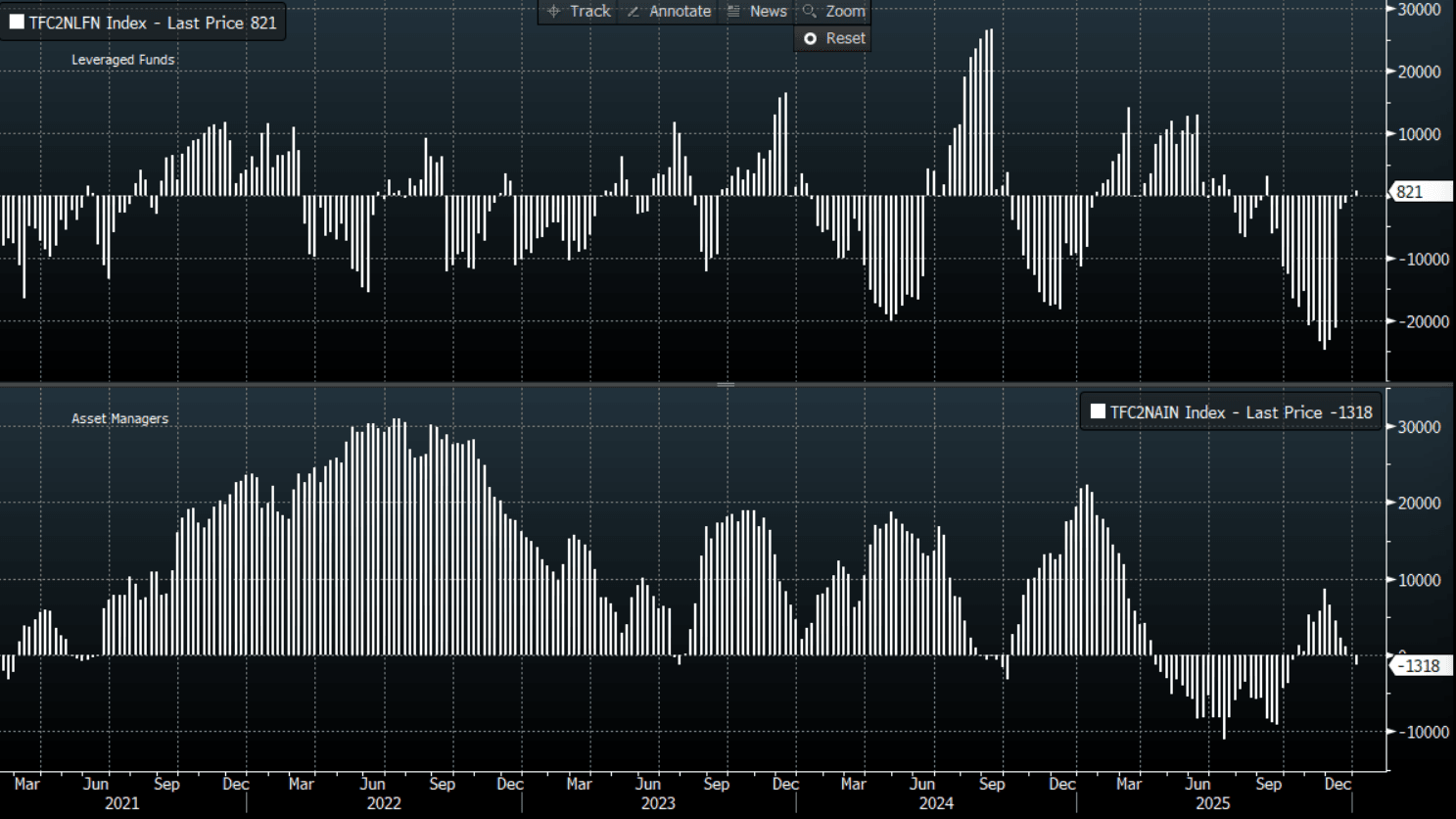
- CFTC Data last week shows Asset managers turning slightly entering the first quarter, -1318(Last +1168). The Leveraged community has turned slightly long after rapidly reducing its short into the end of year, +821(Last +45).
- The BBDXY Average True Range for the last 10 Trading days: 381 Points
Fig 1: USD Index CFTC Data
Source: MNI - Market News/Bloomberg Finance L.P
CHINA PRESS: China Polysilicon Sentiment Weakens
China’s polysilicon market sentiment has weakened sharply after authorities fully scrapped value-added tax export rebates for photovoltaic products and reportedly tightened self-discipline mechanisms following regulatory talks, Yicai reports. Sources said regulators have recently warned major firms of potential antitrust risks, laid out explicit rectification requirements and demanded concrete corrective actions. Authorities said companies must not coordinate on capacity, utilisation rates, production or sales volumes, or pricing. Firms must not divide markets, allocate output, or share profits in any form, nor coordinate on current or future prices, costs, or production and sales plans.
CHINA PRESS: China To Promote Interest Rate Subsidies For SMEs
China will prioritise support for private investment by optimising an interest subsidy program for loans to small, medium, and micro enterprises, aimed at reducing corporate financing thresholds and costs, according to a recent State Council executive meeting. Local governments such as Beijing and Shenzhen have already rolled out similar interest subsidy policies for SMEs, primarily targeting innovative firms. In Beijing, for example, companies can receive subsidies covering 20% of the interest incurred on their first loan within one year from the date of the initial disbursement, with the total subsidy capped at 1% of the actual loan amount. The meeting described these measures as a critical step toward expanding effective demand and advancing macroeconomic policy innovation.


