US UTILITIES: Edison International $Benchmark EIX 2Y +145 Area FV
Apr-30 14:18
(EIX; Baa2/BBB-neg/BBB) * MNI FV 124a * IPT 145a * FV based on secondary curve including EIX 5.45 2...
Want to read more?
Find more articles and bullets on these widgets:
Historical bullets
US-EU: BBG-ECB's Largarde Pushes Back On Bessent At G7 Over Iran War Fallout
Mar-31 14:14
Bloomberg News reports that ECB President Christine Lagarde used the 30 March videoconference involving G7 finance ministers, energy ministers, and central bank governors "to challenge [US] Treasury Secretary Scott Bessent’s optimism that the Iran war’s economic fallout will be short-lived".
- The article claims that, according to people familiar with the matter, Bessent used the call to play down the economic damage engendered by the war in Iran and the subsequent spike in energy prices and concerns about supply of hydrocarbons. However, Lagarde is said to have "pushed back", telling those on the call "that the effects would be felt for a long time because so much has already been destroyed,"
- Lagarde, speaking to The Economist last week, said "expectations of a swift return to normal may be “overly optimistic”. “We are facing a real shock…probably beyond what we can imagine at the moment.”
- Bessent, often deployed by the White House to try to soothe market jitters, has played down the risk of any sustained price or supply shock. Indeed, speaking to Fox News on 30 March, he claimed that “Over time, the US is going to retake control of the straits [of Hormuz], and there will be freedom of navigation — whether it is through US escorts or a multinational escort”.
- This stance may have been somewhat altered following WSJ reports of the potential for President Donald Trump to seek a peace deal even with the Strait subject to Iranian control, and today's Truth Social blast at allies including the UK.
MNI: US FEB JOLTS JOB OPENINGS 6882K (7240K DEC, REV FROM 6946K)
Mar-31 14:00
- MNI: US FEB JOLTS JOB OPENINGS 6882K (7240K DEC, REV FROM 6946K)
- US FEB JOLTS QUITS RATE 1.9% (2.0% DEC)
US DATA: MNI Chicago Report™: Around A Third See 2-4% Higher Selling Prices
Mar-31 13:52
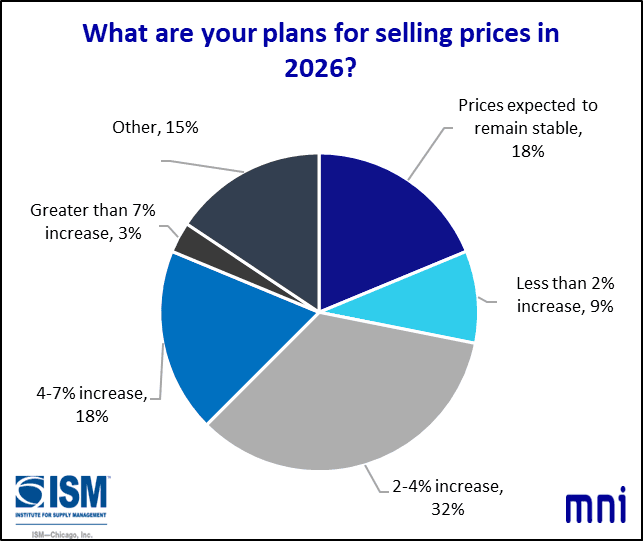
In March, the Chicago Report™ also asked firms “What are your plans for selling prices in 2026?”
- Nearly a third (32%) of respondents planned to increase selling prices by 2-4%.
- 18% of respondents reported that Prices are expected to remain stable, while the same proportion reported a 4-7% increase in selling prices.
- 15% of respondents reported Other plans for selling prices.
- 9% of respondents planned to enact a Less than 2% increase, while just 3% saw a Greater than 7% increase.
- Respondents noted that pricing is likely to be influenced by fluctuations in commodity costs as well as changes in tariff policies.