MNI RBA WATCH: Board To Hike On Inflation Concerns

The Reserve Bank of Australia Board is likely to raise the cash rate by a further 25 basis points to 4.35% when it meets on Tuesday, as it seeks to contain inflationary pressures stemming from the Middle East conflict.
A move next week would be the Bank’s third consecutive 25bp increase this year and return the cash rate to the peak reached during the post-Covid inflation response in December 2024, fully reversing 2025’s easing.
Markets have priced in around a 75% chance of a hike, and see the cash rate reaching 4.75% by December, implying at least two more increases.
While the Middle East conflict and its impact on oil prices have added to inflationary pressure, the RBA was already concerned about persistent price rises, with Governor Michele Bullock noting after March's meeting that inflation remains too high, excess demand persists, and that inflation expectations must remain anchored. (See MNI RBA WATCH: Timing Drove Split Vote, Not Direction-Bullock)
Minutes from the March meeting showed the Board believed the Gulf supply shock would exacerbate existing capacity pressures, while future demand destruction remained only a possibility.
INFLATION & LABOUR
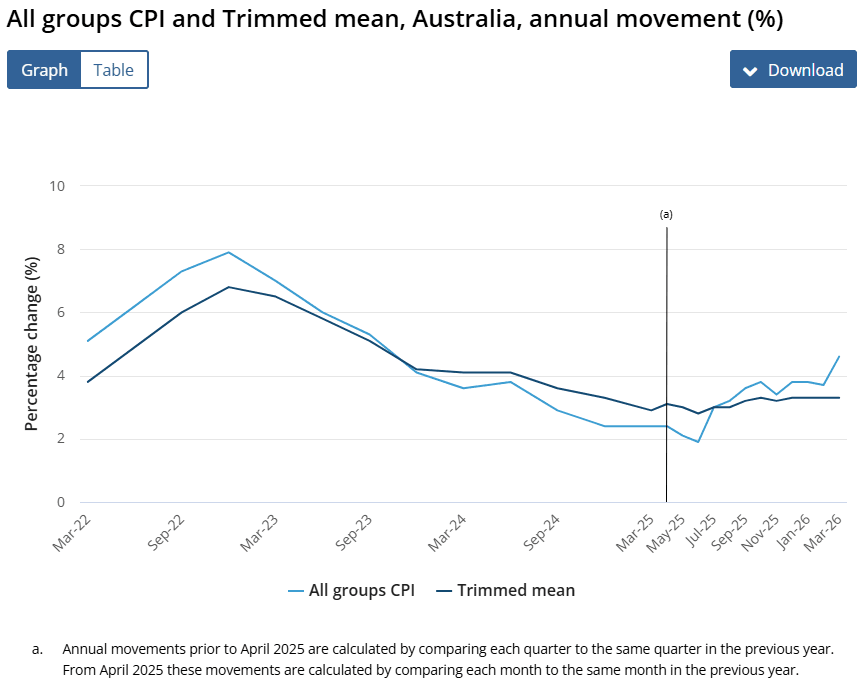
Q1 trimmed-mean inflation, the first full quarterly inflation print since the start of the conflict, was 0.8% q/q, 10bp below expectations and down from 0.9% in Q4, while headline CPI increased 1.4%, in line with forecasts. On a monthly basis, trimmed-mean inflation was 0.3% in March, up 10bp from February, while the annual pace increased 10bp to 3.5%. Headline CPI rose 4.6% y/y, up 90bp from February but 20bp below expectations.
While the results were not as strong as many expected, March was still very early for broad pass-through to become evident, a fact the RBA will keep in mind.
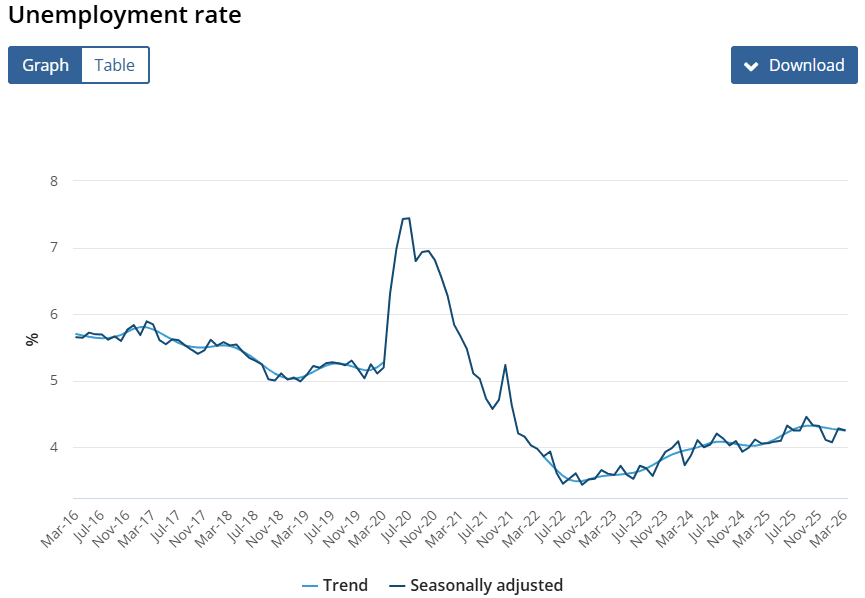
The unemployment rate also held steady at 4.3% in March, in line with expectations, while employment rose by 17,900, slightly below the forecast 20,000 increase, reinforcing the RBA’s view that the labour market can withstand higher interest rates. (See MNI POLICY: RBA Believes Labour Market Can Absorb Higher Rates)
Employment growth was driven by full-time work, which increased by 53,000, partly offset by a 35,000 decline in part-time jobs. Hours worked rose 0.5% in March.
The 0.4% increase in full-time hours worked was supported by a 0.5% rise in full-time employment, while part-time hours worked increased 0.6% despite a 0.7% decline in part-time employment. The RBA expects the unemployment rate to rise by a further 10bp by mid-2027.
FUTURE STRATEGY
While the RBA is likely to hike next week, the pace of further tightening will depend on the trajectory of the Iran conflict and how long policymakers expect the oil supply shock to persist, former RBA economists told MNI.
The Board's split vote at the March meeting also signalled that members may take a less hawkish approach than would typically be expected in response to a purely demand-driven shock, according to James Morley, professor of macroeconomics at the University of Sydney. The RBA is likely to signal greater awareness of downside risks to activity within its updated Statement on Monetary Policy, including weaker consumer confidence and the implications for labour market conditions, he noted.
“They will signal that the pace of further rate hikes will be moderated by concern about what’s happening in the domestic economy,” Morley said.


