SOFR OPTIONS: SFRZ6 96.0625/95.9375/95.75/95.625 Put Condor
SFRZ6 96.0625/95.9375/95.75/95.625 put condor vs. 95.90 (5% delta) paper paid 4.0 on 6.0K....
Want to read more?
Find more articles and bullets on these widgets:
Historical bullets
GILTS: Yields Up 11bps This Week, Led By Breakevens
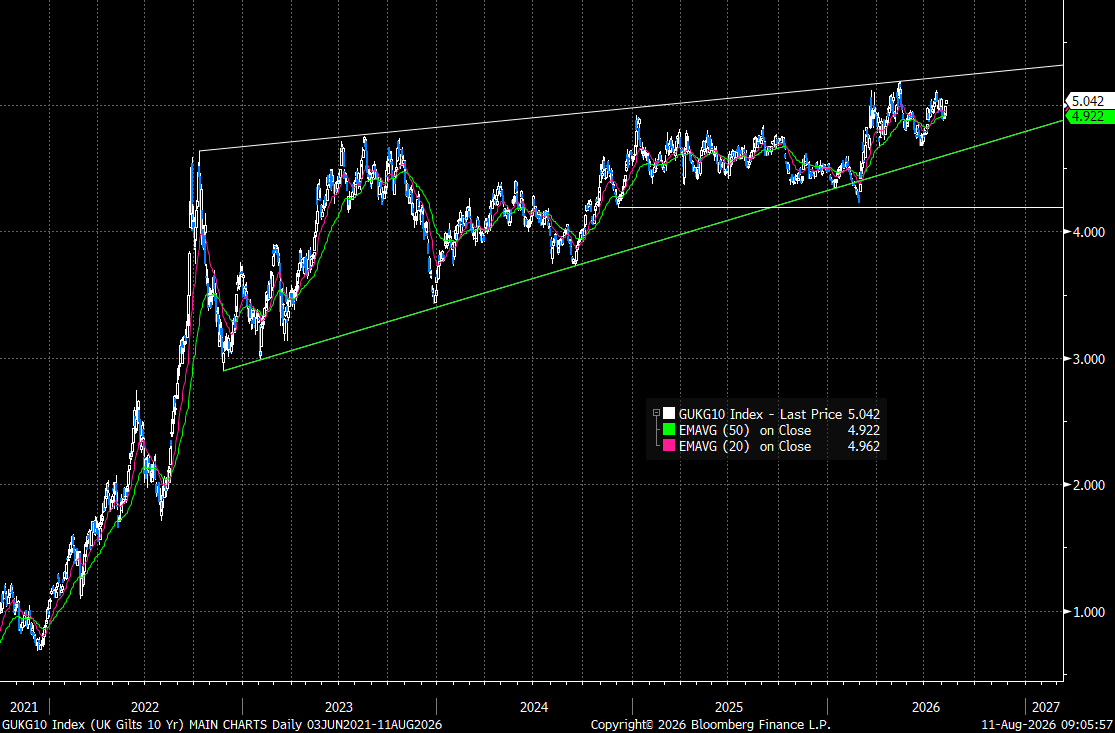
The Gilt curve has seen a fairly parallel shift higher this week, with nominal yields up ~11bps, underperforming both Bunds and Treasuries. 10-year yields are currently at 5.04% (+5.5bps today). The main topside level to monitor is the July 23 high of 5.12%. Zooming out, yields remain wedged between two trendlines drawn from late-2022 extremes (see chart).
- Across the curve, this week’s moves have been breakeven led – unsurprising given the moves in front-month Brent and natural gas futures. Middle East headline flow remains the primary focus for markets today, ahead of US CPI tomorrow.
- Overnight, BRC like-for-like retail sales eased to 1.0% Y/Y (vs 1.7% prior), below three analyst forecasts ranging from 1.4-2.0% Y/Y.
- On Thursday, the first estimate of Q2 GDP is expected to show growth slowing from Q1's 0.63% pace. The BOE's Q2 GDP forecast is for 0.34%Q/Q while the Bloomberg consensus looks for a marginally stronger print around 0.4%Q/Q. Activity has held up better than expected this year and through the Iran conflict. We wouldn’t expect the data to have much monetary policy impact, MPC swing voters (such as Governor Bailey) now seem less focused on GDP - and still point to a soft labour market instead.
- Meanwhile, the Clacton by-election takes place on Thursday.
Figure 1: 10-year Gilt Yields
IRAN: Hormuz Stalemate Continues Amid Conflicting Demands For Compensation (1/2)
Expectations surrounding the prospect of a deal to fully reopen the Strait of Hormuz have deteriorated since Monday amid stricter Iranian conditions and US President Donald Trump's as-yet-unspecified demand for compensation from Iran.
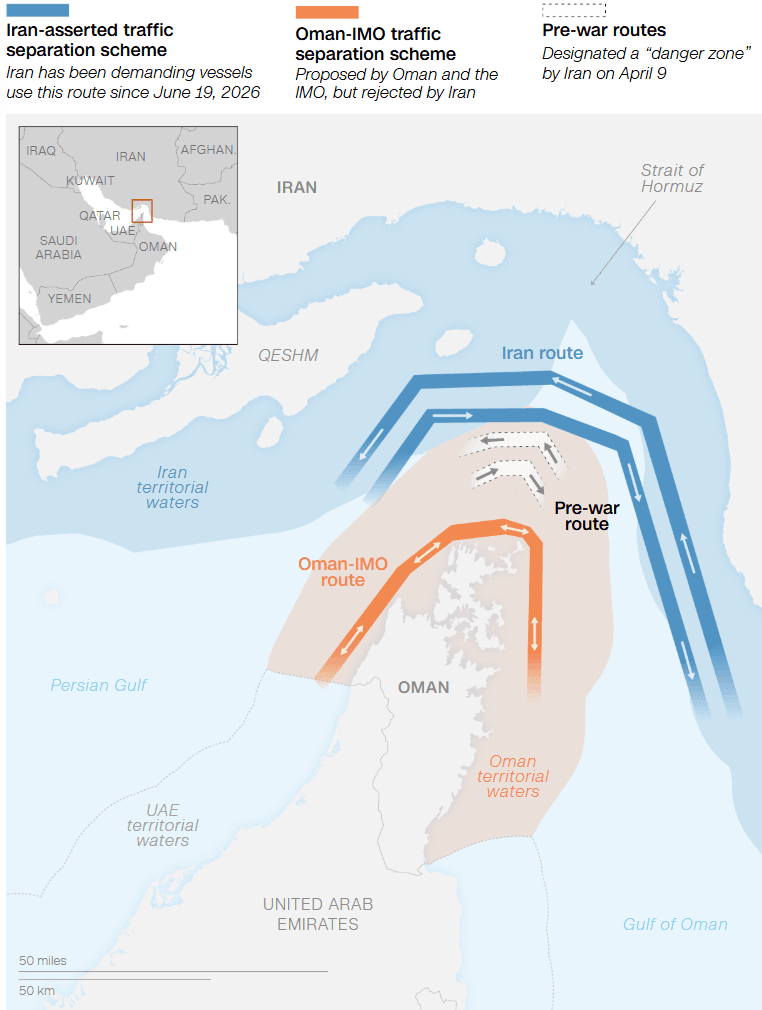
- Tehran has made it clear that any bilateral deal with Oman on the waterway is wholly separate from any eventual agreement with the US. Over the weekend, Mohammad-Bagher Zolghadr (replaced as Secretary of the Supreme National Security Council on 10 August) announced demands, including the lifting of the US naval blockade and the US removing its troops from the region. The US is also required to: pay for damages caused in the '12-Day War' in 2025 and the current conflict, lift sanctions, and unfreeze Iranian assets held abroad.
- Zolghadr's demands made out that these concessions could come at the same time as those on the Strait of Hormuz (Iran effectively gaining sovereignty over the waterway and able to charge fees). However, the MoU said sanctions would only be lifted once a deal on Iran's nuclear program was in place, and the release of frozen assets would happen sequentially rather than unconditionally.
- Acquiescing to these demands would mark a complete capitulation from the White House, and on 10 August Trump indicated that not only would he not accept, but that he would now impose new financial demands on Iran.
- Speaking to reporters, Trump said “They asked for reparations, you might say. Or they asked for money for the damage that we’ve done. I said that’s a good idea. Well, we’re going to ask for money for the damage they’ve done over a 50-year period.”
IRAN: Hormuz Stalemate Continues Amid Conflicting Demands For Compensation (2/2)
- Trump then made similar claims for compensation from Iran on Truth Social, adding "Also, with respect to the Iran negotiations, Iran should be responsible for the damages and death caused to the people of Lebanon, Syria, Yemen, and Gaza!"
- Speaking to Al Jazeera, Charles Kupchan, a former special assistant to ex-US President Barack Obama, said Trump's comments on compensation should not be taken literally, “Unfortunately, we are just looking at some back-and-forth banter here, where neither the Iranians nor the Trump administration is being serious." As Kupchan notes, the situation remains serious for both sides. Iran "cannot survive" if it cannot export its oil, while Trump risks a wipeout for the Republicans in the November midterms if gas prices remain elevated. Despite Trump's claim that the US has "100% control" of the Strait, traffic through the Strait has become increasingly choked.
- Reuters reported earlier "Shipping traffic through the Strait of Hormuz fell to six on Monday, compared with a 10-day average of about 11 vessels, shipping data showed, amid fading hopes of a peace deal between the U.S. and Iran...In pre-war days, about 130 to 140 ships typically transited the strait."
Map of Routes Through Strait Of Hormuz