KRW: Scope Remains for Foreign Selling, But Further KRW Losses Could be Slower
Jun-04 13:01
- Thursday's run higher in USDKRW and resultant cycle and multi-decade high print of 1,540.55 helps retain the short-term momentum that's been building through the bounce off 1,439.20 and the early May lows. However, there are growing signs that further strength in USD/KRW could be more limited given the growing domestic equity holding, stretched leveraged positions and more activist authorities on FX.
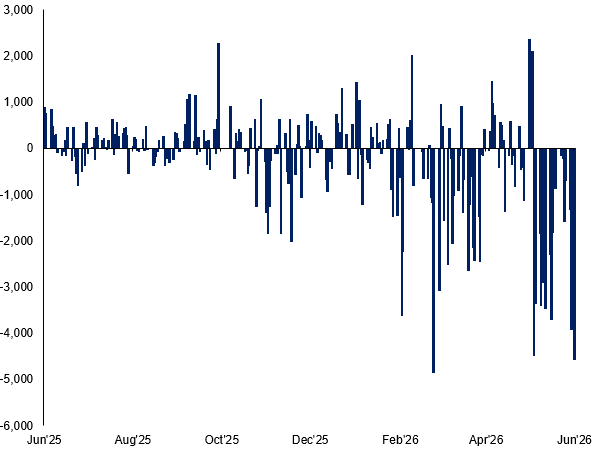
- Weakness in the FX rate this week has again coincided with sizeable foreign outflows from local markets. KOSPI net foreign transaction data still shows a sizeable net outflow and close to the fastest pace since the onset of the Iran War. This long-held correlation likely has further to run, particularly as foreign holdings remain well elevated (JPM estimate 40% of Korean equities are held by offshore accounts, even after this year's ~$70bln net selling).
Figure 1: Net foreign selling of KOSPI-listed equities
Source: MNI / Bloomberg Finance L.P.
- In contrast with previous bouts of equity selling, however, is the strength of the KOSPI over the past few weeks - which may be largely due to the willingness of the authorities to adjust the National Pension Service's domestic stock holding requirements. Domestic stock holding levels have formally shifted after a portfolio overshoot earlier this year. Hiking the domestic stock holding target by 5 ppts effectively removes KRW ~150trl won of selling pressure on domestic equities, improving KOSPI resilience to foreign selling.
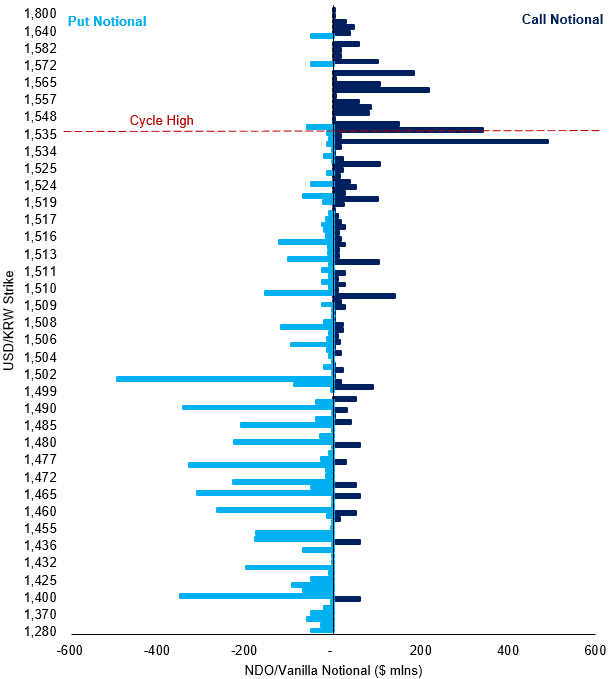
- The recent spot rally also overlays well with FX options market activity over the past few weeks. The 1,540.55 print puts a large proportion of the most sizeable NDO and vanilla options trades wagered over the past fortnight in-the-money - if only briefly. This could suggest more stretched positioning among S/T market forces for further strength.
Figure 2: USD/KRW's cycle high puts some of the more sizeable call strikes in-the-money
Source: MNI / DTCC
- These factors, allied with increased market monitoring from government authorities, could slow any USD/KRW beyond today's high.
Want to read more?
Find more articles and bullets on these widgets:
Historical bullets
MNI: US REDBOOK: STORE SALES +7.8% WK ENDED MAY 02 VS YR AGO WK
May-05 12:55
- MNI: US REDBOOK: STORE SALES +7.8% WK ENDED MAY 02 VS YR AGO WK
- US REDBOOK: MAY STORE SALES +7.3% VS YR AGO MO
US TSYS: CIBC Flag Potential For Long End Demand, But Wary Of Risks
May-05 12:49
Plenty of focus remains centred on the U.S. long end, with 30-Year yields above 5.00%, a level that some had suggested could trigger demand from real money/passive investors.
- CIBC note that “value in real yields near 2.75% seem attractive and forward expressions like 10y10y within 10bps of its post COVID highs should draw interest. The biggest concern is that buyers may wait for the liquidity of next week’s long end auctions, but we expect to see some scaling in sooner”.
- They are more focused on “insurance demand than pension demand. Long end pension demand is structurally lower in the U.S. than in many other countries, as the average age of people enrolled in U.S. pension plans is higher. So less super long duration exposure is needed to match the pension liability”.
- They also caution that “if we are wrong and 30s aggressively blow through 5%, a risk of dramatic switches in US and WN contracts will come into play. That uncertainty would be problematic for hedgers, some basis positions, spread positions, etc. If the sell off continues, we should see some real money longs to shift from owning these contracts to receiving fixed, putting some tightening pressure on long end spread”.
GILTS: UK 30-Year Yields Hit Highest Level Since 90s
May-05 12:35
UK 30-Year yields have registered the highest level since ’98, as part of the previously covered sell off in UK paper, hitting 5.787%, per LSEG data cited by Dow Jones.
- The next upside level of interest comes in at the May ’98 high (5.927%).
- Little in the way of fresh overt triggers, with most pointing towards an uptick in UK political risk premia ahead of Thursday’s local elections.


