MNI SNB WATCH: Ready To Intervene In FX, But On Hold For Now

The Swiss National Bank looks set to keep interest rates unchanged at 0% this week, while signalling that it is prepared to intervene in the foreign exchange market, after the war in the Persian Gulf helped push the franc to historic end-of-day highs against the euro.
Just two weeks ago, the SNB issued a rare intra-meeting statement, saying that “in view of international developments, our willingness to intervene in the foreign exchange market has increased.” Market participants view it as most likely to act in the euro-franc market, but, before it acts, the SNB will want to see whether the disinflationary impulse from currency strength dominates over the impact of energy prices driven higher by the Iran war.
At the close of business Monday, euro-swiss was trading at EUR0.9051, close to a record end-of-day low, while dollar-swiss was trading at SFR1.2710, just shy of the recent high at SFR1.30.
While Brent crude is now trading above USD100 a barrel, the inflation feedthrough from higher energy costs is more limited in Switzerland than in many other countries, with petroleum products accounting for only 2.5% of the basket. There will be some impact from higher gas and electricity prices, but with the starting point for headline inflation close to zero, policymakers have some time on their side.
Inflation is close to the bottom of the SNB’s 0-2% target range, though the rolling three-month-on-three-month rate is edging above 1%, and looking like forming a bottom as projected by the SNB in its December policy statement.
In statements before the outbreak of the Iran war, the SNB had said the bar to cutting rates into negative territory again was high, and this will remain the case for now, with its next likely policy action focussed on the forex market.
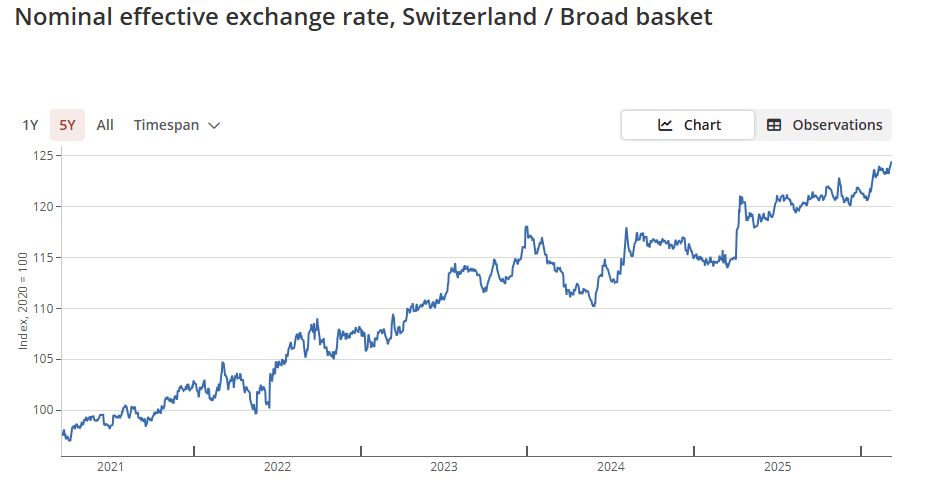
Source: Bank for International Settlements


